Major Dental Work Financing Alternatives

Understanding how to finance major dental work can be complex, but it’s essential to explore your options. There are many patient-friendly alternatives that can help manage the costs of necessary treatments like crowns, dentures, or implants.

This guide will walk you through various financing paths, ensuring you have the information needed to make an informed decision about your dental health.

Whether considering dental insurance, payment plans, or personal loans, knowing what’s available can bring peace of mind and help you find a solution that fits your budget and needs.

Key Highlights

  • Diverse payment options make dental work more manageable by spreading costs over time.
  • In-house financing offers simple, direct agreements without credit checks, easing financial stress.
  • External financing includes loans and credit cards, requiring credit checks but offering a broader scope.
  • Credit scores impact interest rates; higher scores often lead to better financing terms.
  • Understanding and comparing terms ensures dental care affordability without compromising financial stability.

Compare Dental Plans

Understanding Major Dental Work Financing

Major dental work can be expensive, but understanding your financing options helps manage these costs effectively. Dental financing is an essential tool that offers many payment options for patients undergoing extensive dental care.

These options range from flexible payment plans to credit-based solutions, helping to reduce the immediate financial burden.

Diving into what dental financing entails and how it assists with managing dental costs provides clarity and empowers informed decision-making for better dental care management.

What is Dental Financing

What Is Dental Financing?

Dental financing is a method that allows patients to spread out the cost of dental treatments over time, rather than paying the total amount upfront. By offering a range of payment options, dental financing makes dental care more accessible to many individuals.

These options often include payment plans tailored to fit different budgets, allowing for smaller, manageable monthly payments instead of large one-time expenses.

Dental practices often partner with financing companies providing patient financing solutions, such as CareCredit and medical credit cards, which can be used exclusively for healthcare costs.

Flexible financing options may include in-house financing plans available directly through dental offices or external financing solutions offered by third-party lenders.

In-house financing typically involves arrangements without credit checks, providing a straightforward and seamless payment process.

These plans are particularly advantageous for those concerned about their credit score or interest rates associated with external loans.

On the other hand, external financing, such as dental loans or credit cards, often requires a credit check and may come with varying APR rates, impacting the total cost over time.

It’s crucial to consider the terms and conditions of each financing option, including interest rates and repayment terms.

Some options may offer interest-free periods if the balance is repaid within a certain timeframe, while others may have fixed or variable interest rates.

Evaluating these options carefully ensures patients select a plan that aligns with their financial situation and dental care needs.

Employers might offer Flexible Spending Accounts (FSAs), which allow individuals to save pre-tax dollars for medical expenses, including dental care. While this isn’t financing in the traditional sense, it eases out-of-pocket expenses.

Understanding the differences and benefits of these financing plans enables patients to make informed choices, ensuring their dental needs are met without financial strain.

How Financing Helps Manage Dental Costs

Financing plays a crucial role in managing dental costs by breaking down significant expenses into smaller, more manageable payments.

This approach alleviates the financial pressure often associated with major dental work, such as crowns, implants, or dentures.

Financing solutions provide the flexibility needed to proceed with necessary treatments without delay, improving both dental health and patient well-being.

Through patient financing, individuals can access a variety of payment plans that cater to diverse financial situations. Flexible payment options allow patients to plan their finances strategically, ensuring dental costs don’t become an overwhelming burden.

Dental payment plans may be structured to fit monthly budgets, setting a fixed amount payable each month that suits the patient’s economic landscape.

One of the significant advantages of financing dental care is the ability to receive timely treatments. Delaying necessary procedures due to cost concerns could escalate dental issues, potentially leading to more extensive, costly treatments in the future.

Financing solutions ensure that patients can access essential care promptly, preventing long-term complications.

By working with lenders and utilizing tools like FSAs, medical credit cards, or personal loans, patients have a range of choices to manage their expenses effectively.

Interest rates and credit scores play pivotal roles in determining the specific terms of the financing. A good credit score often results in more favorable interest rates, reducing the overall cost of financing.

However, even with less-than-perfect credit, patients might find options through in-house financing, which typically bypasses the traditional credit check process.

The goal of these options is to make dental care as accessible as possible, promoting better oral health and enhancing quality of life.

Ultimately, understanding and utilizing dental financing helps patients maintain financial stability while attending to their oral health needs.

Patients who educate themselves about their payment options are better positioned to choose the right financing solution that aligns with their financial capabilities and dental care requirements.

Exploring these payment pathways is essential for sustaining long-term oral health without compromising financial security, allowing patients to confidently face significant dental work.

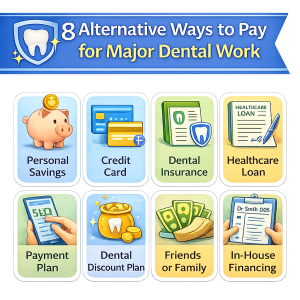
8 alternative ways to pay for major dental work

Types of Financing Options Available

When it comes to managing the cost of significant dental work, understanding the different types of financing options available can make a big difference. Dental practices offer a variety of payment strategies, each tailored to suit distinct financial needs.

From in-house financing plans that allow for direct arrangements with your dentist to exploring external avenues such as loans and credit cards, there’s a method to accommodate everyone.

These diverse financing solutions offer flexibility, enabling patients to receive the dental care they need without financial strain, ensuring more informed and confident decisions.

In-House Financing at Dental Offices

In-house financing offers a convenient solution for those seeking more personal interactions with their dental care provider.

Many dental offices now provide this type of patient financing to help spread out payments for treatments, keeping upfront costs lower and manageable.

In-house financing typically bypasses the need for a credit check, which can be a relief for those concerned about their credit score affecting their ability to receive necessary dental care.

This financing method involves a direct agreement with the dentist’s office, setting up flexible payment plans that suit the patient’s financial capacity.

One of the significant benefits of in-house financing is its simplicity. Patients can often set up these plans without extensive paperwork or external financial institutions, streamlining the process and making it more patient-friendly.

These plans often feature fixed monthly payments, which provide a predictable budgeting situation, so patients aren’t caught off guard by fluctuating costs or surprise interest rates.

This steady payment structure is especially beneficial when addressing extensive treatments like implants or crowns, which can accrue high costs if paid all at once.

In-house financing allows dental practices to establish a closer patient-provider relationship because it involves direct financial dealings within the office.

This arrangement can lead to more personalized care, with questions about payments being addressed directly by someone familiar with the patient’s history and personal financial arrangements.

Some offices might also offer slight discounts or incentives for those using in-house plans, further easing the financial burden. However, these details can vary, so it’s essential to discuss specific terms and conditions with the office directly.

By choosing in-house financing, patients also benefit from more flexible arrangements. These might include no-interest periods if payments are made on time, giving patients time to manage their budgets efficiently.

Though these flexible payment options are negotiated individually, they often prove to be a less stressful choice for those who prioritize simplicity and direct dealings within their healthcare journey.

Exploring in-house financing is a practical first step for many when navigating their dental payment options.

Exploring External Financing Sources

External financing plays a critical role for those who need more financing flexibility than an in-house plan might offer.

These options typically include personal loans, credit cards like CareCredit, and even specialized medical credit cards designed to help with healthcare expenses.

External financing sources often come with varying interest rates and terms, which are influenced by the applicant’s credit score.

While they might require a credit check, these options tend to offer broader financial assistance for comprehensive dental care needs, ensuring patients receive the care they require without prohibitive upfront costs.

Loans from banks or credit unions can provide a substantial sum for major dental procedures. These personal loans usually come with fixed interest rates, offering transparent repayment schedules and predictable monthly payments.

Such loans enable patients to budget effectively for treatments like full-mouth restorations, ensuring they can continue with their dental care without major disruptions.

Additionally, loans might be an excellent option for those who can secure favorable terms due to a strong credit score.

Credit cards, particularly those tailored for medical use such as CareCredit, offer another versatile external financing solution.

CareCredit is widely accepted in many dental practices and provides manageable payment plans with the potential for interest-free periods, fostering affordability in dental care.

These cards often require a credit application, but they offer flexibility in payment that can help manage and prioritize multiple health-related expenses through one financing vehicle.

The aspect of flexibility in external financing is significant. With external solutions, patients can choose from different lenders and compare terms to find the one that best aligns with their financial scenarios.

It’s essential to understand the interest rates and repayment terms associated with these financing methods to avoid unforeseen expenses.

Exploring external financing options allows patients to take control of their financial planning while securing necessary dental treatments.

By evaluating loans, credit cards, and specialized medical financing solutions carefully, patients can find the right balance between immediate dental care and long-term affordability.

Find & Compare Plans Online

Speak with a licensed insurance agent

1-833-667-3396TTY 711

Mon-Fri: 8am-9pm ET

Impact of Credit on Financing

Your credit history plays a crucial role in financing options for major dental work. Understanding how your credit score affects available choices can make a significant difference when planning for dental expenses.

Patients need to be aware of how careful use of credit can ease financial burdens related to dental care. Diving into your credit score’s impact and the cautious use of credit will equip you to make informed financing decisions and manage dental costs effectively.

Understanding Your Credit Score

Your credit score is a key factor in determining your eligibility for various financing solutions. It influences credit checks and can significantly affect the terms you receive on loans, credit cards, or patient financing plans.

Generally, a higher score indicates to lenders that you’re a lower risk, which might entitle you to better interest rates and more flexible financing options.

This score is calculated based on your credit history, outstanding debts, payment history, and the types of credit used.

Regularly checking your credit report ensures its accuracy and can help in identifying areas for improvement, providing a clearer picture when applying for financing.

When diving into dental financing options, understanding how a good credit score benefits you is crucial. It can lead to more favorable terms, such as lower interest rates and higher credit limits, on medical credit cards or personal loans used for dental payment plans.

These factors can significantly affect the total cost of credit used towards dental expenses. A higher credit score can give you access to the best financial deals, which means paying less in interest over time, thus reducing your overall dental costs.

Improving your credit score before seeking dental financing can make a significant difference in the options available to you.

Paying off debts, avoiding new hard credit checks, and ensuring timely payments will positively impact your score, thus opening doors to better financial arrangements.

Lenders often see those with higher credit scores as more responsible borrowers, making you more attractive for diverse financing solutions, including in-house and external flexible payment plans.

Staying informed about credit scoring nuances is essential, especially for seniors looking to finance extensive dental work. Consider speaking with a financial advisor if you’re unsure how to enhance your score.

Being proactive about your credit standing maximizes your chances of securing an affordable financing plan suitable for your dental needs.

Knowledge of your credit situation provides the confidence needed to explore patient financing options, ensuring you choose ones that align with your financial and healthcare requirements.

Using Credit Carefully in Dental Financing

When exploring financing solutions for dental work, using credit wisely can make a world of difference.

Whether you’re looking into personal loans, credit cards, or dental-specific financing options like CareCredit, how you manage your credit plays a pivotal role.

Credit use isn’t just about securing funds; it’s about balancing debt in a way that aligns with your financial health.

Smart credit management can help you take advantage of favorable interest rates and manageable payment plans, reducing the cost of dental procedures over time.

Credit cards, especially those with low APR or introductory interest-free periods, can be useful tools for managing dental costs. By spreading out payments over time, you avoid the hassle of a lump-sum expense.

However, it’s crucial to understand the terms and conditions associated with these cards. Be mindful of interest rates kicking in after the promotional period and aim to pay off the balance before that happens.

Overreliance on credit cards can lead to spiraling debt if not managed judiciously, especially if your credit score doesn’t qualify you for favorable terms.

Personal loans offer a viable alternative for dental financing, especially for those who may prefer fixed repayment schedules. With personal loans, you often receive a fixed interest rate, making it easier to plan monthly payments.

These loans require a thorough credit check and are influenced by your credit score. Start by comparing offers from different lenders, including banks and credit unions, to find terms that best suit your financial situation.

Remember, the goal is to find a manageable payment arrangement that doesn’t overextend your budget while covering your dental health needs.

Regardless of the credit method chosen, it’s imperative to understand your financial commitments clearly. Using credit conservatively ensures you maintain control over your debt.

Strategic credit use promotes financial health, allowing you to address necessary dental treatments without unexpected financial strain.

Exploring credit options with this approach enhances your ability to maintain a good credit score while safeguarding against exorbitant dental costs.

Always consider the long-term implications of using credit to finance dental care, and never hesitate to seek professional guidance if you’re uncertain about the best path forward.

Comparing Financing Options for Major Dental Work

Evaluating various financing options for major dental work can greatly influence your financial stability and ability to afford essential dental care.

We’ll delve into different plans tailored to meet individual needs, considering interest rates, loan terms, and credit score impacts.

Whether you’re considering in-house dental payment plans or looking at external financing solutions like loans and credit cards, understanding these can ease the financial burden of dental procedures, ensuring timely, needed treatments.

Finding the Right Dental Plan for Your Needs

Finding the Right Plan for Your Needs

When seeking a financing plan for major dental work, the key is finding one that aligns with your financial situation and personal preferences.

Patients face diverse options, from in-house financing at dental offices to external solutions like personal loans or medical credit cards.

Each comes with its own set of terms, interest rates, and benefits, making an educated choice vital to managing dental expenses effectively.

In-house financing often presents a straightforward approach, bypassing exhaustive credit checks and offering direct agreements with your dental provider. This can be particularly appealing if you’re wary of your credit score influencing your financing capability.

It allows predictable costs with monthly payments set to avoid financial surprises.

On the other hand, if you’re comfortable exploring external financing, options like medical credit cards, including CareCredit, provide specialized coverage for healthcare-related expenses.

This alternative might require a credit check, which means terms and interest rates can significantly depend on your credit score.

Good credit scores can unlock more favorable interest rates or introductory periods with no interest, helping reduce the overall cost of financing. Personal loans from banks or credit unions offer another avenue.

They typically come with fixed rates, which ensure your payment schedule remains steady and predictable. Such loans can cover large expenses, like implant procedures, without affecting immediate cash flow.

Understanding each option’s implications, such as interest rates, payment flexibility, and credit requirements, is crucial.

For example, while in-house plans might offer easy access and minimal credit concerns, external financing solutions often require careful consideration of loan APR rates and the potential long-term cost impact.

Comparing these options based on your credit situation, budget, and personal preferences ensures the selected plan supports your dental care needs effectively.

Ultimately, it’s about balancing immediate financial capability with long-term health priorities.

With comprehensive dental financing insights, patients can proceed confidently, selecting a financing approach that allows timely access to necessary treatments while maintaining financial stability.

Remember, examining each option’s terms thoroughly maximizes both dental and financial health, reducing stress and promoting a proactive approach to dental care management.

Consider these factors when evaluating your dental financing plan options for a seamless fit with your needs:

  • Assess your current financial situation and set a realistic budget.
  • Check the terms and interest rates of in-house financing options.
  • Evaluate the potential benefits of medical credit cards for your expenditures.
  • Investigate the fixed rates and terms of personal loans.
  • Compare credit requirements across different financing options.
  • Analyze long-term cost impacts and interest rate differences.
  • Consider flexibility in payment schedules and plans.
  • Prioritize plans that align with your health priorities and financial stability.

By evaluating these aspects, you can choose the most appropriate dental financing option for your situation.

Conclusion: Exploring Your Dental Financing Options

Exploring dental financing options can significantly enhance your ability to manage the costs of major dental work.

By familiarizing yourself with the different financing solutions available, you can make informed decisions that align with both your financial capabilities and dental needs.

From flexible payment plans offered directly by dental offices to external financing solutions like personal loans and medical credit cards, the key is finding a balance that suits your specific circumstances.

Credit scores often play a pivotal role when considering various patient financing options. Lenders assess your credit score to determine eligibility and interest rates, impacting the overall cost of credit.

It’s beneficial to maintain a healthy credit history to ensure you access the best terms available.

But remember, modest credit scores don’t necessarily eliminate viable options; many dental offices offer in-house financing, bypassing traditional credit checks, easing access to necessary dental care.

Interest rates and payment options need careful consideration, as they can significantly affect the total cost over time.

Whether through in-house financing or external lending, understanding rates ensures you choose a plan that integrates well with your financial landscape.

Some financing options might offer attractive introductory interest rates or no-interest periods, which can make these choices more appealing. Evaluating these terms enhances financial flexibility and ensures manageable payment schedules.

Insurance might cover part of your dental expenses, but it’s often not enough for extensive procedures like implants or dentures.

External financing, such as loans or medical credit cards, provides a necessary cushion, spreading out expenses into smaller, more digestible payments. This approach maintains budget balance without compromising on vital dental health.

Finally, a reflective comparison of all available options is crucial. Lenders, interest rates, payment plans, and your own credit situation should all be considered carefully.

By doing this, you ensure that your choice in financing solutions is one that allows both the swift undertaking of essential dental work and the preservation of fiscal health.

Readers are encouraged to review their options and explore dental financing opportunities by entering their ZIP code on our site. This personal approach to research can lead to tailored insights, meeting both location and personal budget needs.

Finding the right financing option for major dental work is essential. Exploring patient-friendly choices, such as setting up a payment plan through your dentist’s office or researching third-party financing options, can make dental care more accessible.

Understanding the costs, interest rates, and terms helps you choose a plan that suits your financial needs. Start by discussing options with your dentist and consider all the available resources.

Remember, being informed empowers you to make decisions with confidence. Enter your ZIP code on our website to explore dental insurance plans, availability and terms vary by location.

Compare Dental Plans

Frequently Asked Questions

What are some options for financing major dental work?

Financing options for major dental work include in-house financing through your dentist, external loans, and medical credit cards like CareCredit. These options help spread out costs, making dental care more affordable over time.

How does in-house dental financing work?

In-house dental financing involves setting up a payment plan directly with your dental office. This usually does not require a credit check, offering a convenient way to pay for treatments with fixed monthly payments tailored to your budget.

What is considered when applying for external financing?

When applying for external financing like personal loans or credit cards, lenders typically evaluate your credit score. A higher score can lead to better interest rates and terms. It’s essential to compare options to find a plan that aligns with your financial situation.

How can credit scores affect dental financing options?

Credit scores impact the interest rates and terms you can receive for loans and credit-based financing. Good credit can make borrowing cheaper, while in-house plans might be better for those concerned about credit checks, as they often do not require them.

What should I consider when choosing a dental financing plan?

Consider the interest rates, repayment terms, and your overall budget. Some plans may offer no-interest periods or fixed rates. Comparing different options ensures you choose a plan that fits your financial and dental care needs.

Have Questions?

Speak with a licensed insurance agent

1-833-667-3396

TTY users 711

Mon-Fri: 8am-9pm ET

Find & Compare Plans Online

Speak with a licensed insurance agent

1-833-667-3396TTY 711

Mon-Fri: 8am-9pm ET

ZRN Health & Financial Services, LLC, a Texas limited liability company