Alternatives to Traditional Dental Insurance

Exploring dental care options outside of traditional insurance can be a wise choice for seniors seeking flexibility and control over their oral health needs. While typical insurance plans might not fit every individual’s situation, various alternatives exist that can offer substantial benefits.

These include discount dental plans, dental savings plans, and direct reimbursement options. Each choice comes with its unique features, such as reduced fees, straightforward payments, and often no annual limits.

Understanding these options can aid seniors in making informed decisions that align with their dental care priorities and financial needs.

Key Highlights

  • Dental discount plans offer immediate savings without waiting periods or annual maximums, unlike traditional insurance.
  • Membership dental programs provide reduced treatment rates with flexible provider options.
  • Dental savings plans are ideal for those seeking predictable costs and greater network flexibility.
  • Exploring dental insurance alternatives empowers seniors with affordable choices tailored to their needs.
  • Use online tools and local resources to find the best dental coverage options for 2026 in your area.

Compare Dental Plans

Understanding Dental Insurance and Its Alternatives

Dental insurance can be a great way to help manage the cost of dental care, but it’s not the only option out there. Understanding the differences between dental insurance and its alternatives can help you make informed decisions about your dental care coverage.

We’ll explore what dental insurance is and how it contrasts with other available options. Knowing about alternatives to traditional dental insurance, such as dental savings plans, can provide you with more affordable choices tailored to your needs.

What is Dental Insurance?

Dental insurance, simply put, is a type of health plan that covers a portion of your dental care expenses.

It typically helps pay for preventative services, such as cleanings and exams, and may offer partial coverage for procedures like fillings, crowns, and sometimes orthodontics.

Understanding dental insurance means recognizing that it often comes with a monthly premium, similar to other insurance types. Policies usually have a yearly coverage limit, meaning there’s a maximum amount the insurance will pay each year for your dental care.

Monthly premiums vary, but what’s consistent is the purpose: helping make dental care more affordable. These plans operate on a network basis, so the insurance works with specific dentists.

Visiting a dentist within the network usually ensures lower out-of-pocket costs for you. It’s crucial to look at the network providers when choosing a plan to ensure your preferred dentist is included.

It’s also important to understand that dental insurance typically requires a waiting period. This means after purchasing a plan, there could be a delay before certain procedures are covered.

This waiting period avoids users signing up for coverage right before an expensive treatment and dropping the plan afterward. The plans often include co-pays and deductibles, a set amount you pay before your coverage starts paying its share.

An attractive aspect of dental insurance is its predictability in costs. The set premiums and outlined coverage limits provide a sense of financial planning.

Add in the peace of mind from knowing that routine dental care costs are budgeted, and you get to focus more on your dental health rather than worrying about large, unexpected bills.

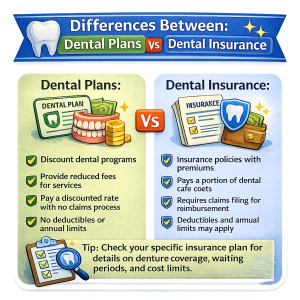
difference between dental plans vs dental insurance

How Dental Insurance Differs from Alternatives

While dental insurance provides valuable coverage for many, it’s not the only option available. Alternatives to traditional dental insurance often offer more flexibility and affordability, especially for those who might not visit the dentist frequently.

Dental savings plans, or discount dental plans, are popular alternatives that provide discounts on treatments and procedures at participating dentists.

Unlike insurance, dental savings plans operate on a fee-paid-membership basis rather than a monthly premium. Members enjoy pre-negotiated discounts on various dental services when they visit participating dentists.

These plans don’t have waiting periods, and there’s no annual limit on the savings you can receive. This means you can benefit from immediate savings from day one, making them a practical choice for urgent care needs.

The coverage of dental savings plans remains consistent across various procedures, providing savings on a broad spectrum of dental services, from routine check-ups to more complex procedures.

They offer a clear and straightforward approach to managing dental costs by providing price transparency.

While these plans don’t cover the cost directly as dental insurance might, the savings offered at the point of treatment can sometimes amount to substantial financial benefits.

Another key difference lies in flexibility. Dental savings plans typically feature extensive networks of widely available dentists.

This allows members to easily switch providers or seek specialists without the intricate network rules of dental insurance. This flexibility can be crucial for those who travel or move frequently.

When considering alternatives to traditional dental insurance, assess your dental care needs, frequency of visits, and financial strategy.

While both dental insurance and savings plans aim to reduce out-of-pocket costs, the absence of fixed premiums and wait times makes dental savings plans an accessible option for many.

Ultimately, understanding the nuances between these options can empower you to choose a plan that aligns with your needs and budget.

Consider these practical benefits of choosing dental savings plans over traditional dental insurance:

  • Enjoy immediate access to discounts without waiting periods.
  • Benefit from no annual savings limit, maximizing your financial advantages.
  • Experience price transparency with clear, pre-negotiated discounts at checkouts.
  • Access a broad network of providers nationwide without restrictions.
  • Switch dentists freely, making it ideal for frequent travelers.
  • Avoid paying monthly premiums, promoting a cost-effective strategy.
  • Gain flexibility to select services you actually need.

In evaluating your dental care alternatives, assess how these aspects align with your personal health and financial goals.

Exploring Dental Plans

Exploring Dental Discount Plans

If you’re looking for alternatives to traditional dental insurance, dental discount plans might be worth considering.

These plans offer a unique approach to managing dental costs by providing instant savings on various dental services without the complexities often associated with insurance.

Unlike insurance with premiums and waiting periods, dental discount plans provide immediate discounts at the time of dental service. Understanding how these plans work and what benefits they offer can help you decide if they’re a suitable fit for your needs.

What Are Dental Discount Plans?

Dental discount plans are membership-based programs designed to offer reduced rates on dental services across a network of participating dentists. Unlike traditional dental insurance, they don’t pay for any portion of your dental care.

Instead, members pay a nominal annual fee to access pre-negotiated discounts on a wide range of dental services. This means when you visit a dentist within the discount plan’s network, you can enjoy savings on treatments like cleanings, fillings, crowns, and dentures.

These plans can be particularly attractive for those who need more affordable dental care without waiting periods or annual maximums that typically accompany insurance plans.

Signing up for a dental discount plan is usually straightforward, with immediate access to dental savings upon enrollment.

You simply pay for the discount plan, receive a membership card, and present it at participating offices to obtain reduced rates for dental treatments.

One key advantage is the plan’s simplicity: there are no hidden costs or complex reimbursement processes to manage.

This structure not only simplifies dental care budgeting but also provides peace of mind knowing you can visit the dentist whenever the need arises without the intricate paperwork of insurance claims.

Another essential aspect of dental discount plans is flexibility. They often boast extensive networks, allowing members to choose from a wide range of dentists and specialists.

This flexibility is beneficial if you wish to change dentists or need specialist care. By not being tied down to an insurance network, you ensure that your dental care remains both consistent and comprehensive.

While these plans don’t contribute to the cost of services, the upfront discounts can make dental care more accessible, especially in urgent situations or when maintaining routine dental health.

Benefits and Considerations of Discount Plans

Dental discount plans have several benefits that can make them an appealing option for many individuals seeking affordable dental care.

One of the primary benefits is the absence of waiting periods, which means you get access to savings immediately after enrolling in the plan.

This feature is particularly advantageous if you have urgent dental needs or want to get procedures done soon after joining without delay.

The absence of annual maximums also means you’re not limited by how much you can save within a year, allowing for continuous savings regardless of how many dental services you require.

Another advantage is cost transparency. With dental discount plans, you know the exact discount you’ll receive on procedures before visiting the dentist.

This transparency helps you effectively plan and manage your dental budget without unexpected costs. Moreover, the extensive networks of dentists participating in these plans make it easier to find a provider near you.

You can choose from various specialists and general dentists, ensuring that you receive the dental care best suited to your needs. This choice of providers is a stark contrast to traditional insurance, where your options might be limited to specific in-network providers.

However, while dental discount plans offer flexibility and immediate savings, it’s essential to consider some limitations. Since these plans don’t function like insurance, you’re responsible for paying the discounted rate out-of-pocket at the time of service.

This can be a disadvantage if you’re looking for a plan that shares the burden of costs upfront. It’s crucial to review what each discount plan offers and compare it to your dental needs.

Evaluating the available services, discount percentages, and participating dentists will help you determine if the plan aligns with your financial and dental care strategies.

In conclusion, dental discount plans present a flexible, immediate-savings-oriented alternative to traditional dental insurance. They cater well to those who prioritize visiting dentists regularly without facing bureaucratic hurdles or delays in obtaining care.

With careful consideration of their structure and benefits, you can decide if a dental discount plan is the right choice for your dental needs.

Consider entering your ZIP code on our site to explore your local options and find a plan that provides the savings and services tailored to your budget.

Find & Compare Plans Online

Speak with a licensed insurance agent

1-833-667-3396TTY 711

Mon-Fri: 8am-9pm ET

Membership Dental Programs: A New Option

Exploring membership dental programs can open up new ways to manage your dental care expenses outside traditional insurance and discount plans.

These programs work by offering members access to dental services at reduced rates, transforming the way costs are handled.

Understanding how these plans differ from both insurance and discount plans can make it easier to determine if they offer a suitable alternative for your dental needs.

Let’s delve into how these programs operate and how they measure up against standard insurance coverage.

How Membership Dental Plans Work

Membership dental plans offer a straightforward approach to accessing dental care, removing the complexities of insurance networks, premiums, and waiting periods.

When you enroll in a membership program, you’re essentially joining a plan where dental services are available at reduced prices through a network of participating dentists. Members pay a regular fee, which grants them discounts on various procedures.

Unlike traditional insurance, these plans don’t involve reimbursement processes or claims forms, as savings occur directly at the point of service.

The structure of membership dental programs often involves paying an annual or monthly fee. This fee provides members with the advantage of negotiated rates for dental treatments, ranging from routine cleanings to more extensive procedures like crowns or root canals.

Services like preventive check-ups, which include cleanings and exams, are typically emphasized, promoting consistent oral health at reduced costs. This focus on preventive care helps members maintain their dental health more effectively over time.

A significant benefit of these programs is their simplicity and transparency. Since you’re paying a membership fee to access reduced prices, you always know what to expect in terms of costs.

This can be particularly helpful for budgeting, as it eliminates surprises associated with out-of-pocket expenses. For seniors and caregivers trying to manage dental care on a fixed income, this predictability is crucial.

The program’s flexibility is another highlight, as these plans usually feature broad network inclusion.

Members aren’t confined to specifically chosen dentists, making it easier to accommodate personal preferences or necessities, such as staying with a trusted dentist known for quality care.

This benefit ensures continuous care without the administrative restrictions typically faced with traditional insurance.

When considering such programs, it’s important to weigh your specific dental needs against what is offered. While membership dental plans prioritize affordability through discounts, the exact savings and available services can vary.

Therefore, thoroughly examining what’s included with the membership, the scope of the dental network, and the frequency of your visits can guide you to the right choice.

Comparing Membership Plans and Insurance

While both membership dental plans and traditional dental insurance aim to make dental care more manageable, they operate through distinctly different mechanisms.

Understanding these differences can help you make informed decisions about which approach might be better suited to your situation. One of the primary distinctions between these two models is how costs are managed.

Membership plans focus on upfront discounts, while insurance often requires navigating premiums, deductibles, and claims processing.

Traditional insurance typically involves a monthly premium that contributes to a pool. This pool covers part of your dental expenses, especially for preventive care, but may require you to pay out-of-pocket first before getting reimbursed.

Conversely, membership programs lack such reimbursement processes, providing instant savings at the point of service.

With insurance, there’s frequently a limit to the amount paid by your insurer each year, whereas membership plans don’t generally impose annual maximums on savings, offering consistent reductions regardless of treatment frequency.

Additionally, membership plans eliminate the waiting periods often associated with dental insurance.

This absence of delays ensures you can access the benefits immediately after enrollment, which can be crucial for addressing immediate dental needs without postponement.

For many, particularly seniors or those with urgent care requirements, this aspect can represent a significant advantage.

Another key difference lies in network flexibility.

Membership plans typically boast expansive networks, allowing users to select from a wide range of dentists and specialists without the constraints often imposed by insurance plans.

This flexibility can be an attractive feature for anyone who values having options and opportunities to maintain or change providers easily.

Ultimately, choosing between these approaches depends on individual dental needs, budget considerations, and personal preferences.

Both methods offer unique advantages, and understanding these can empower you to select a plan that aligns with your lifestyle and healthcare requirements.

While membership plans provide direct savings and less bureaucracy, insurance may provide more comprehensive financial coverage for extensive dental work, which can be necessary depending on your overall dental health strategy.

It’s crucial to weigh the pros and cons of each to decide which offers the most value and peace of mind.

Choice for Dental Needs

Making the Right Choice for Your Dental Needs

Deciding on the best way to manage your dental care can be a complex task, especially with the variety of options available to you.

Whether it’s traditional dental insurance or alternative plans like dental savings programs, each comes with its own set of advantages and considerations.

It’s important to weigh factors such as coverage, costs, and potential savings when evaluating your choices.

Exploring where to find dental insurance and its alternatives can also broaden your understanding, helping you make an informed decision that aligns with your specific needs and budget.

Factors to Consider: Coverage, Costs, and Savings

When evaluating dental insurance and its alternatives, starting with coverage, costs, and savings is key.

Dental insurance often provides comprehensive coverage for preventative dental care, including cleanings and exams, usually covering a percentage of the costs for more extensive treatments like fillings, crowns, and sometimes orthodontics.

These insurance plans, however, come with premiums, deductibles, and often a yearly maximum coverage limit, which can impact your out-of-pocket costs if extensive care is needed over a year.

On the other hand, dental savings plans offer an alternative approach by providing immediate discounts on a variety of dental services.

These plans work without the premiums and annual maximums that traditional dental insurance imposes, allowing for more predictable costs without waiting periods.

The costs for membership in a savings plan are usually an annual or monthly fee that grants access to reduced rates at participating dental offices.

It’s crucial to compare these reduced costs with potential outlays of traditional insurance to assess which offers greater savings based on your unique dental care needs and the frequency of visits you anticipate.

Affordability is another primary concern. Seniors on a fixed income may find the predictable nature of a dental savings plan appealing, as it avoids unexpected spikes in expenses.

These savings plans also typically include a broader network, giving patients the flexibility to choose from a wider range of dentists and services, enhancing the overall savings and care experience.

Using an affordable dental or savings plan strategically can alleviate the impact of rising costs while ensuring necessary dental care is accessible.

Thus, understanding differences in coverage and weighing the costs can guide you in determining how each option might suit your dental priorities.

Consider your dental care patterns, urgency of treatment requirements, and budget to make a choice that balances coverage needs with financial realities. This thoughtful evaluation will empower you to make confident decisions regarding your dental care strategy.

Where to Find Dental Insurance and Alternatives

Finding the right dental insurance or savings plan requires some research, but with the right resources, you can simplify this process.

Start by exploring online platforms like Bestdentalinsurance.org, where you can compare different dental insurance plans and their alternatives based on your location.

This tool lets you enter your ZIP code to view a range of local options, providing detailed information on both premiums and potential savings. This is particularly useful for assessing the variety of options tailored to fit individual needs and budget constraints.

Dentists themselves are also valuable resources. Many dental practices offer in-house savings plans, resembling membership programs, that give patients the advantage of reduced treatment costs without dealing with the complexities of insurance.

These programs often emphasize preventive care, ensuring consistent check-ups and addressing minor issues before they escalate.

Additionally, your dental provider can offer insights into network details, guiding you toward insurance options where they are included, which can facilitate treatment cost management.

Beyond traditional insurance companies and dental offices, some organizations provide information on dental care financing programs. These options target specific patient groups, such as seniors, offering alternatives tailored to different care needs.

Exploring dental programs through community health services can widen the net for potential plans, providing options that might align with your financial situation and care requirements.

Another avenue is reviewing customer forums and dental health blogs, which can offer anecdotal evidence and personal experiences about specific insurance plans or alternatives.

These sources can provide insights into the user experience, highlighting potential pros and cons related to service quality, cost-effectiveness, and coverage reliability.

Making use of available technologies and networks can demystify the process and help you find a program that delivers both value and ease of use.

In summary, making the right choice requires weighing various factors and thoroughly exploring available options.

By considering your primary dental needs, financial situation, and the resources outlined here, you can select a plan that not only provides necessary coverage but also aligns with your dental and financial goals.

To begin, explore your local options by entering your ZIP code on our website, ensuring the perfect fit for your dental care needs.

Exploring alternatives to traditional dental insurance can empower you with flexible and potentially more affordable options to suit your needs. With a variety of dental savings plans, discount plans, and membership programs available, understanding your choices is key.

Review the options that align with your dental care needs, budget, and preferences. Remember, coverage and benefits vary by location and plan. To find more tailored options, enter your ZIP code on our site for a closer look at what’s available in your area.

This way, you’re better equipped to make informed dental care decisions.

Compare Dental Plans

frequently asked questions

What are some alternatives to traditional dental insurance for seniors?

Alternatives include discount dental plans, dental savings plans, and membership dental programs. These options often provide reduced fees, straightforward payments, and may not have annual limits. They can offer flexibility and control tailored to individual dental care needs.

How do dental savings plans differ from traditional dental insurance?

Dental savings plans operate on a membership basis instead of a monthly premium. They provide pre-negotiated discounts on treatments at participating dentists, with no waiting periods and no annual limits, unlike traditional insurance which typically involves premiums, deductibles, and coverage limits.

What are the benefits of dental discount plans?

Dental discount plans offer reduced rates on services without waiting periods or annual maximums. Members receive discounts at the time of dental service, pay an annual membership fee, and benefit from flexibility in choosing from a network of participating providers.

Is there a waiting period with dental savings plans?

No, dental savings plans typically do not have waiting periods, allowing members to immediately access savings on dental treatments upon enrollment.

How can I find dental coverage options in my area?

You can explore local dental insurance and savings plan options by visiting online platforms like Bestdentalinsurance.org. By entering your ZIP code, you can view different plans available in your area, assessing their benefits and costs to find a suitable match for your dental care needs.

Have Questions?

Speak with a licensed insurance agent

1-833-667-3396

TTY users 711

Mon-Fri: 8am-9pm ET

Find & Compare Plans Online

Speak with a licensed insurance agent

1-833-667-3396TTY 711

Mon-Fri: 8am-9pm ET

ZRN Health & Financial Services, LLC, a Texas limited liability company