




How Much Are Braces With Insurance? Real Out-of-Pocket and Monthly Math

Reviewed by Russell Noga, Licensed Insurance Broker — Last updated November 25, 2026

With insurance, braces typically cost about $3,000 to $5,000 out of pocket for a common $5,000 to $6,000 case, because plans with orthodontic benefits pay up to 50% but stop at a lifetime orthodontic maximum that is often around $1,000 to $2,000. For example, on a $5,000 set of metal braces with a $1,500 lifetime cap, the plan pays $1,500 and you owe $3,500, which many orthodontists spread over 12 to 24 monthly payments.

2027 by the Numbers

$3,000-$7,000

typical fee for metal braces before insurance (Consumer Affairs, cited by Humana)

$5,000-$6,000

average comprehensive orthodontic fee in the ADA Survey of Dental Fees

Up to 50%

share many plans with orthodontics pay, up to a lifetime dollar cap (FAIR Health)

$3,500

2027 health FSA contribution limit, up from $3,400 in 2026 (IRS)

Braces are one of the largest dental bills a family or adult will face, and the quoted fee rarely matches what you end up paying. The type of braces, your plan’s orthodontic cap and the payment plan all change the final number.

This page sticks to the dollars: what each type of braces costs, how to work out your share when a lifetime maximum caps the benefit, what the monthly payment looks like, and how tax-free accounts can trim the bill. If you still need to find out whether your plan includes orthodontics at all, start with does dental insurance cover braces, and for a plain-language look at how ortho benefits are built, see orthodontic coverage in dental insurance.
Compare Dental Plans With Orthodontic Benefits

What Braces Cost Before Insurance Pays Anything

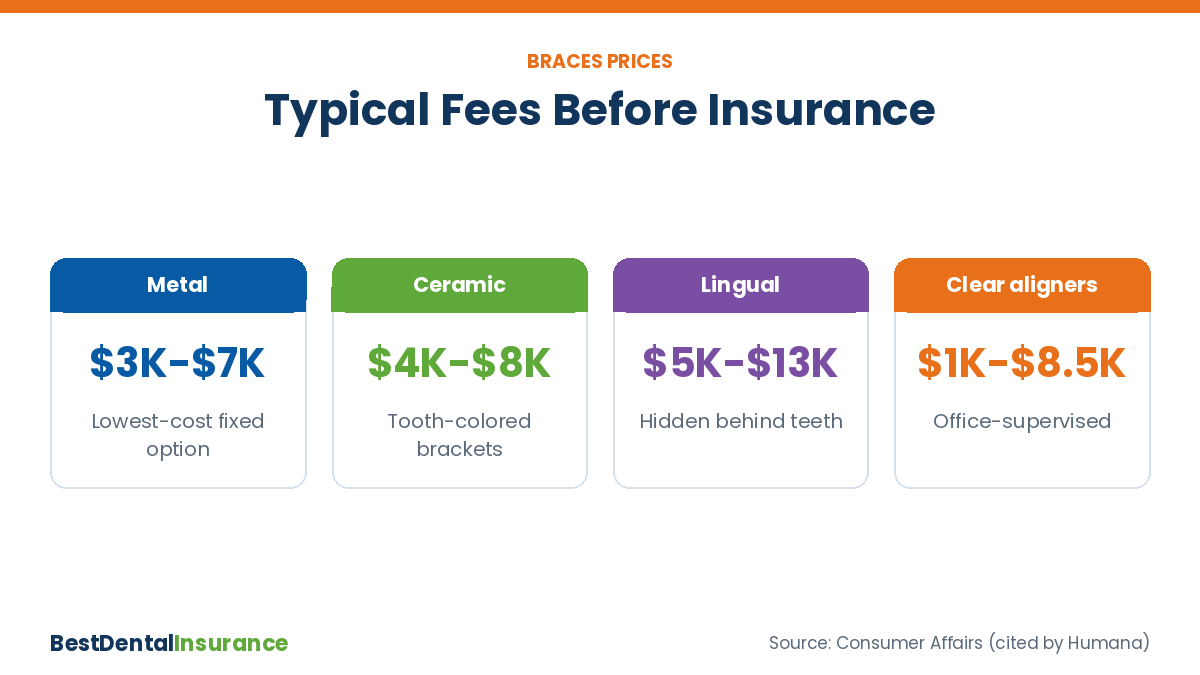
How much are braces with insurance chart showing typical braces fees by type before insurance

The orthodontist’s fee is the starting point, and it swings widely. Tooth-colored and hidden options cost more than metal, and complex bites push any type higher. The American Dental Association’s fee survey has put the average comprehensive orthodontic case at about $5,000 to $6,000.

Type of bracesTypical fee before insuranceWhat drives the price
Metal braces$3,000 to $7,000Usually the lowest-cost fixed option; price rises with case length
Ceramic (clear or tooth-colored) braces$4,000 to $8,000Brackets cost more to make and can need more care
Lingual braces (behind the teeth)$5,000 to $13,000Custom brackets and more chair time for the orthodontist
Clear aligners (office-supervised)About $1,000 to $8,500Low end is minor fixes; full cases cost about the same as braces or more

Sources: Consumer Affairs braces cost guide (metal, ceramic and lingual ranges as cited by Humana; aligner range from Consumer Affairs). ADA average via Healthline. Fees vary by region, case and provider.

Most quotes are one case fee covering brackets, adjustments and removal. Ask whether retainers and the records fee are included.

Dental Insurance Quotes

Call a Licensed Agent Now

Compare dental plans for individuals, families and seniors from several insurance companies in one call.

☎ 1-833-667-3396

TTY users 711  |  Mon–Fri: 8am–9pm ET

No obligation to enroll

The Lifetime Cap Math Many Cost Guides Skip

Many online braces guides figure your cost by cutting the fee in half, since plans often pay up to 50%. That shortcut only works when half the fee is smaller than your plan’s lifetime orthodontic maximum. FAIR Health notes that this lifetime cap is the total the plan pays for the whole course of treatment and is usually separate from the yearly maximum for other dental care, which our guide to annual vs. lifetime maximums explains.

Cap check: Divide your lifetime orthodontic maximum by your plan’s coinsurance share. With a $1,500 cap at 50%, any fee above $3,000 hits the cap, so the plan pays $1,500 and every dollar beyond that is yours. Since most full braces cases cost more than $3,000, the cap, not the percentage, usually sets the payout.

Case feeIf the plan simply paid 50%You pay: $1,000 capYou pay: $1,500 capYou pay: $2,000 cap
$2,400 short or limited case$1,200$1,400$1,200$1,200
$5,000 metal braces$2,500$4,000$3,500$3,000
$6,000 ceramic braces$3,000$5,000$4,500$4,000
$9,000 lingual braces$4,500$8,000$7,500$7,000

Our worked examples at 50% coinsurance, no orthodontic deductible and no prior ortho claims. Case fees are examples chosen from the published ranges above, not quotes.

The gap between the second column and the others is what a half-price estimate leaves out, and on lingual braces it can top $3,000.

How Your Plan Hands Over Its Share

The benefit rarely arrives in one check. FAIR Health says plans usually make a first payment when the braces go on, called banding, and pay the rest over the treatment period.

Monthly installments. Delta Dental of Massachusetts describes automatic monthly payments of no more than 12 installments, starting from the banding date.

Quarterly installments. A Delta Dental orthodontic summary for one employer group describes a share of the initial fee at the start, then quarterly payments until treatment ends or the lifetime maximum is reached.

Payments stop with coverage. Delta Dental of Massachusetts says the automatic payments stop if coverage ends before treatment is done, including when a dependent ages out.

Switching carriers. A new carrier may prorate the benefit and pay only for the months of treatment left while you are enrolled with it.

If a job change, a missed premium or a birthday ends coverage midway, the unpaid benefit shifts onto your bill.

Turning Your Share Into a Monthly Payment

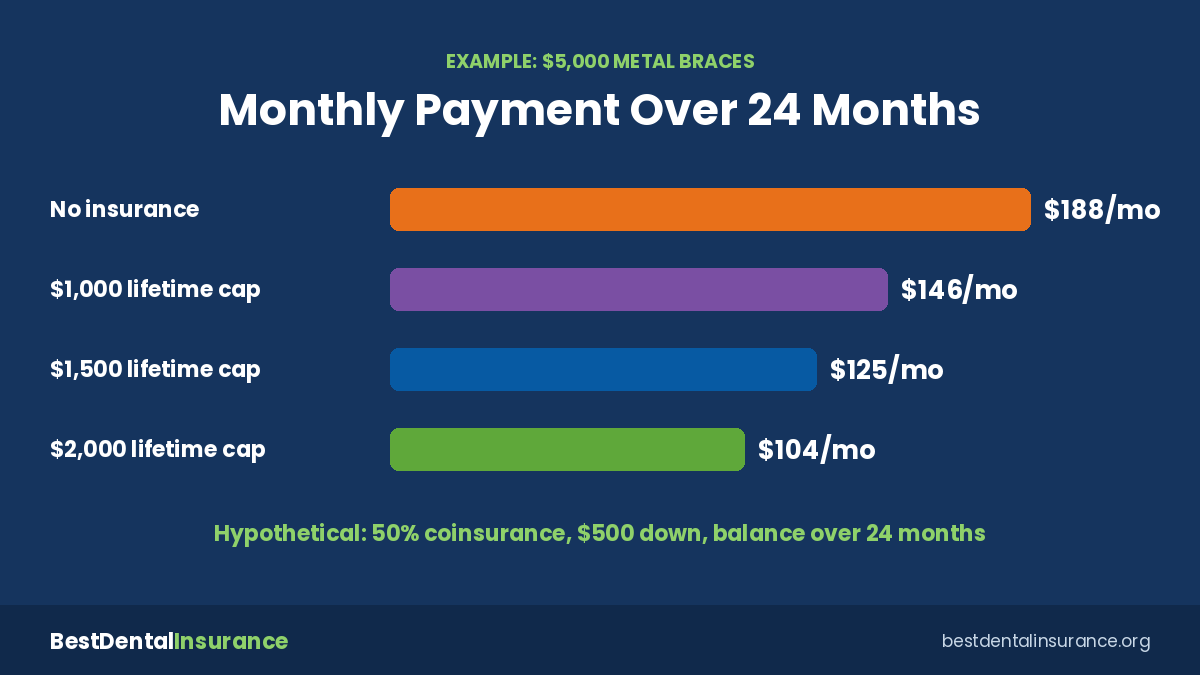
How much are braces with insurance monthly payment example for a 5000 dollar case by lifetime orthodontic maximum

The American Association of Orthodontists says most in-house payment plans ask for a down payment and then spread the balance over 12 to 24 months, often with no interest. Third-party financing can run longer, with rates that depend on your credit. FAIR Health cautions that financing may lower each payment but keep you paying after the braces are off.

1

Start with the case fee. Your orthodontist quotes $5,000 for metal braces.

2

Subtract the expected benefit. Your plan pays 50% up to a $1,500 lifetime cap, so it covers $1,500 and your share is $3,500.

3

Pay the down payment. The office asks for $500 at the start, leaving $3,000.

4

Spread the rest. Over 24 months that is $125 a month. Over 18 months it is about $167 a month.

This example assumes the office subtracts the expected benefit up front. Ask whether yours does, or bills the full fee and credits insurance as it arrives.

Find & Compare Plans Online

Speak with a licensed insurance agent

1-833-667-3396TTY 711

Mon-Fri: 8am-9pm ET

Why Adults Often Pay More Than Kids for the Same Braces

Adult braces usually cost a bit more than braces for children, partly because adult treatment tends to take longer. Healthline puts average adult treatment time at about 19.9 months. The bigger difference is coverage: FAIR Health says plans with orthodontics may limit it to members or dependents under 19, and adult care is usually not covered.

A teen on a family plan. A $5,000 case with a $1,500 cap at 50% leaves the family about $3,500 to pay. See dental insurance for kids for plans that include ortho.

A teen starting close to 19. If the plan stops ortho at 19, installments due after that birthday may never be paid, so the family’s share can rise.

An adult with no ortho benefit. The whole case fee is out of pocket, which is $3,000 to $7,000 for metal braces at the published range.

An adult with adult ortho. Some employer and individual plans include adults. Compare them in our guide to the best dental insurance for adult braces.

Tax-Free Dollars and Other Ways to Shrink the Bill

IRS Publication 502 lists braces among the dental costs that count as medical expenses, so the share your plan leaves can come from a health FSA or an HSA. The 2026 health FSA limit is $3,400 and the 2027 limit is $3,500, with carryover of up to $680 into 2027 and $700 into 2028 when the employer plan allows it. An HSA requires a high-deductible health plan.

Split it across two plan years. Braces often run past one year, so a $3,500 share can be funded with about $1,750 in each year’s FSA instead of one large election.

Ask about prepaying. Under 2007 IRS proposed cafeteria plan rules, FSA plans may, but do not have to, reimburse an orthodontic payment once you have actually paid it in advance. Check your plan’s rule before paying the full fee up front.

Know the take-home effect. Health FSA money comes out before income tax and payroll taxes, so each dollar of braces cost paid this way costs you less than a dollar of take-home pay.

1

Get more than one consultation. The AAO says most of its members offer free or low-cost first visits, which makes comparing case fees easy.

2

Ask about a pay-in-full discount. FAIR Health lists discounted pricing for paying the whole fee up front as a common option.

3

Stack a second plan carefully. A second policy with its own ortho cap can add to the benefit. See secondary dental insurance for orthodontics for how that works.

4

Line up coverage before banding. Plans can deny or prorate treatment that started before coverage began, so check waiting periods first.

Bottom Line

Braces often cost $3,000 to $13,000 before insurance, and most plans with orthodontics pay up to 50% only until a lifetime cap, often around $1,000 to $2,000, runs out. Divide your cap by the coinsurance share to see whether the cap limits your benefit, then budget your share as a down payment plus monthly payments, paid with FSA or HSA dollars when you can.

See dental plans & rates in your ZIP code

How Much Are Braces With Insurance — Frequently Asked Questions

➤ How much do braces cost per month with insurance?

It depends on your share and the payment term. In one example, a $5,000 case with a $1,500 insurance benefit and a $500 down payment leaves $3,000, or $125 a month over 24 months. Orthodontist payment plans commonly run 12 to 24 months.

➤ Why does my plan pay only $1,500 when my braces cost $6,000?

Your plan likely has a $1,500 lifetime orthodontic maximum. Once 50% of the fee passes that cap, the plan stops paying, so you owe $4,500 on a $6,000 case instead of $3,000.

➤ Do ceramic braces cost more with insurance than metal braces?

Usually, yes. Most plans pay the same capped benefit no matter which type you choose, so the extra $1,000 or more that ceramic brackets can add generally lands on your side of the bill.

➤ Do I pay a deductible before insurance helps with braces?

FAIR Health says there is usually no deductible for orthodontic services. Some individual plans do use a separate lifetime orthodontic deductible, so read the benefit summary before you budget.

➤ Can my FSA pay the braces down payment up front?

Often, but not always. IRS proposed rules let FSA plans reimburse orthodontic payments made in advance once you have paid them, but each employer plan decides whether it allows this.

➤ How much more do adults usually pay for braces than kids?

Adult cases tend to cost slightly more and run longer. The larger gap comes from coverage, since many plans pay ortho only for people under 19, so an adult often pays the full fee.

➤ What happens to my insurance payments if my coverage ends during braces?

Plans that pay in installments generally stop paying when coverage ends, so the rest of the benefit shifts to you. A new plan may pay only for the months of treatment left.

➤ Is it cheaper to pay for braces all at once?

It can be. FAIR Health lists discounts for paying the full fee up front as a common option. Weigh the discount against keeping cash on hand and any interest-free monthly plan the office offers.

Dental Insurance Quotes

Call a Licensed Agent Now

Compare dental plans for individuals, families and seniors from several insurance companies in one call.

☎ 1-833-667-3396

TTY users 711  |  Mon–Fri: 8am–9pm ET

No obligation to enroll

Find & Compare Plans Online

Speak with a licensed insurance agent

1-833-667-3396TTY 711

Mon-Fri: 8am-9pm ET

ZRN Health & Financial Services, LLC, a Texas limited liability company