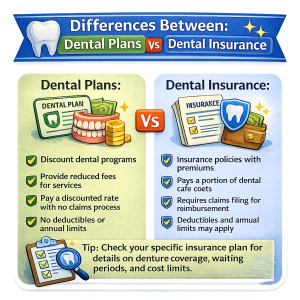
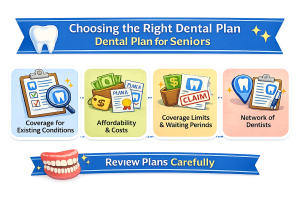
When choosing a dental plan, several factors come into play, especially for seniors. The first consideration is the range of dental benefits offered.
Original Medicare is limited in scope, leaving many beneficiaries to explore Medicare Advantage plans or standalone dental plans. Medicare Advantage can include dental benefits, but these vary widely, requiring careful assessment of what is actually covered.
Seniors should check whether these plans include preventive services like cleanings and exams or extend to more significant procedures such as fillings, crowns, or dentures. Comparing dental coverage options for seniors often requires understanding these distinctions; otherwise, one might end up with coverage that doesn’t meet their true needs.
Another key factor is cost. Dental coverage costs can differ significantly between plans. Standalone dental insurance often provides specific dental care coverage, with monthly premiums that fit into most budgets.
However, seniors must evaluate the total cost of coverage, including premiums, co-pays, deductibles, and any out-of-pocket maximums.
Medicare Advantage plans might offer dental benefits as part of the package, potentially reducing separate monthly costs but may have limits on care providers or service coverage. Understanding these financial aspects helps in choosing a plan that’s both cost-effective and comprehensive.
Network flexibility is also crucial when comparing plans. Standalone dental insurance typically offers expansive networks of dental professionals, allowing greater choice and continuity of care.
In contrast, Medicare Advantage plans may require choosing from a more narrow network. This network consideration affects both the convenience and costs of accessing dental care, making it an important factor in the decision-making process.
Seniors seeking consistent care with their preferred dental healthcare providers should weigh this heavily in their planning.
Information about wait periods can be another crucial coverage factor. Some plans have waiting periods before specific types of care are covered.
Understanding these details ensures that seniors aren’t caught without necessary coverage when they need it. This knowledge is vital for those anticipating immediate dental procedures.
Thoroughly researching these aspects helps in avoiding unexpected costs and ensures timely care.
Ultimately, the choice of dental plan should balance coverage scope, cost, network access, and personal health needs. As seniors navigate these choices, gathering detailed plan information and consulting with dental insurance educators or financial advisors can provide valuable insight.
This proactive approach not only helps in securing adequate coverage but also ensures that seniors can maintain their dental health without undue financial stress. With informed decision-making, seniors can effectively cover their dental needs, complementing their Medicare benefits and achieving peace of mind.
Understanding how to cover dental needs while on Medicare can be challenging, but exploring supplemental dental insurance or stand-alone plans may offer solutions. Checking your state’s Medicaid program could provide options for low-income seniors.
Compare plans carefully to find the right match for your needs and budget. With some research, you can feel secure about your dental health.
Enter your ZIP code on our website to view plans available in your area, helping you navigate the variety of coverage options and costs that vary by location.