


Reviewed by Russell Noga, Licensed Insurance Broker — Last updated November 4, 2026
Full coverage dental insurance is a plan that covers all three levels of care (preventive, basic and major), often at about 100%, 80% and 50%, up to a yearly dollar cap. No plan pays for everything, so compare the annual maximum, waiting periods, deductible and first-year coinsurance before you buy one on your own or through work.
2027 by the Numbers
32.8%
of in-network annual maximums sit between $1,000 and $1,500 (NADP, via ADA News)
48.2%
of in-network annual maximums sit between $1,500 and $2,500 (NADP, via ADA News)
$5,000
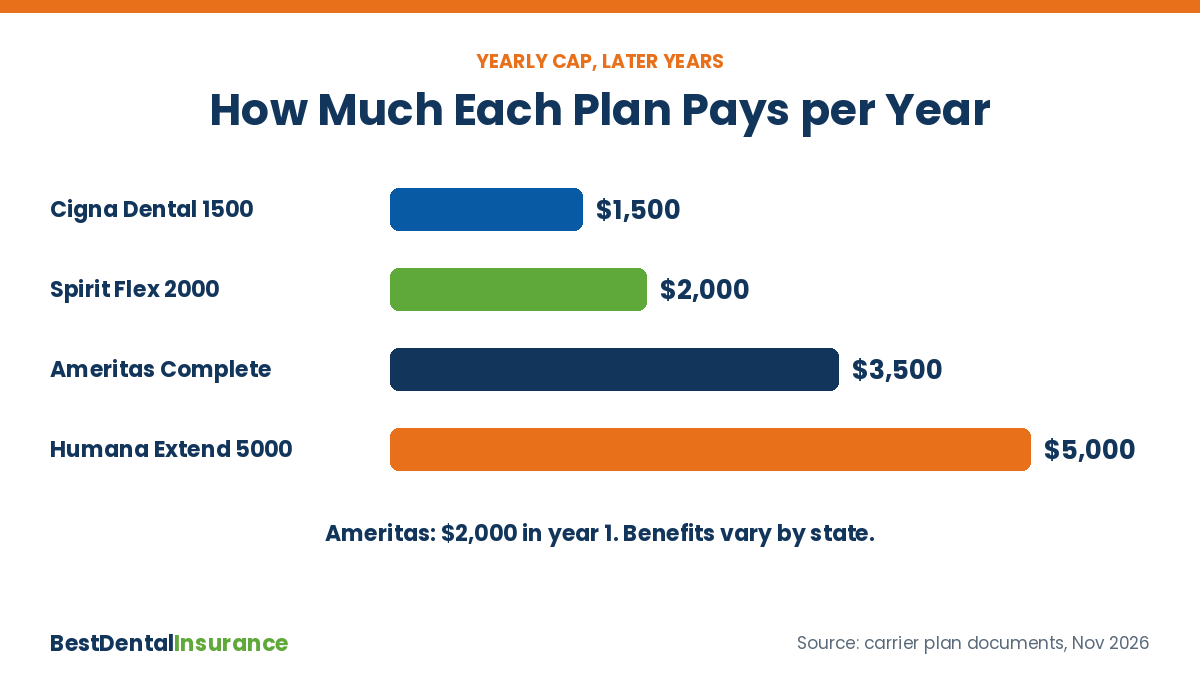
yearly maximum on Humana Extend 5000, one of the higher caps sold to individuals (Humana)
Guardian and Cigna both point out that full coverage has no industry definition. In everyday use it means a plan that pays something toward cleanings, fillings and crowns, not one that leaves you with a zero bill.
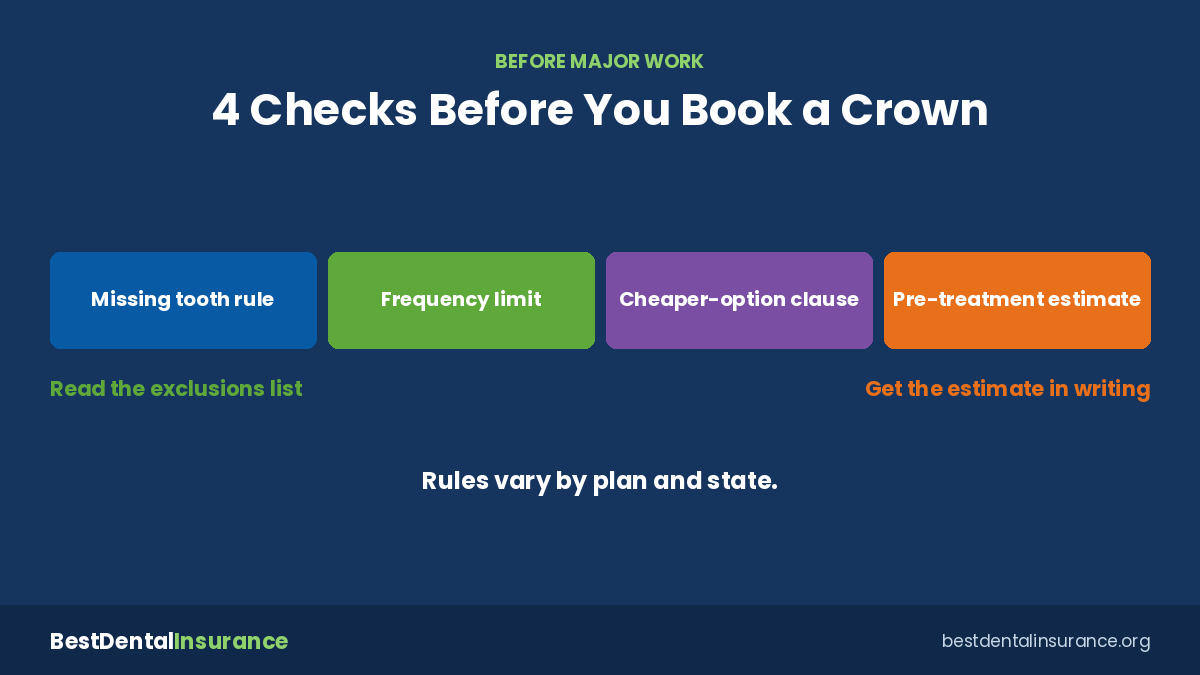
This guide puts the numbers from four carriers’ own plan papers side by side, works out what each would pay on the same crown, and flags the clauses that shrink a claim. For a broader look at where plans fall short, see our guide to limitations on dental insurance coverage.