




Does Dental Insurance Cover Wisdom Teeth Removal? Costs, Coverage and Waiting Periods

Reviewed by Russell Noga, Licensed Insurance Broker — Last updated October 27, 2026

Yes, most dental insurance plans cover wisdom teeth removal, but usually only part of the cost. A simple extraction is often treated as a basic service, while a surgical or impacted extraction may be covered as oral surgery or a major service at a lower percentage, and waiting periods often apply on new plans.

Wisdom teeth are the last molars to come in, and many teens and adults need them taken out because they are stuck, crowded or causing pain. The bill depends on how hard the teeth are to remove and what kind of sedation you choose. Your dental plan, and sometimes your medical plan, can pay a large share.

This guide explains how insurers classify wisdom tooth extractions, what you may pay with and without coverage, and when anesthesia is covered. If you are new to how plans pay, start with our guide to common dental procedures insurance may cover.
Compare Dental Plans That Cover Oral Surgery

Wisdom Teeth Removal Cost With and Without Insurance

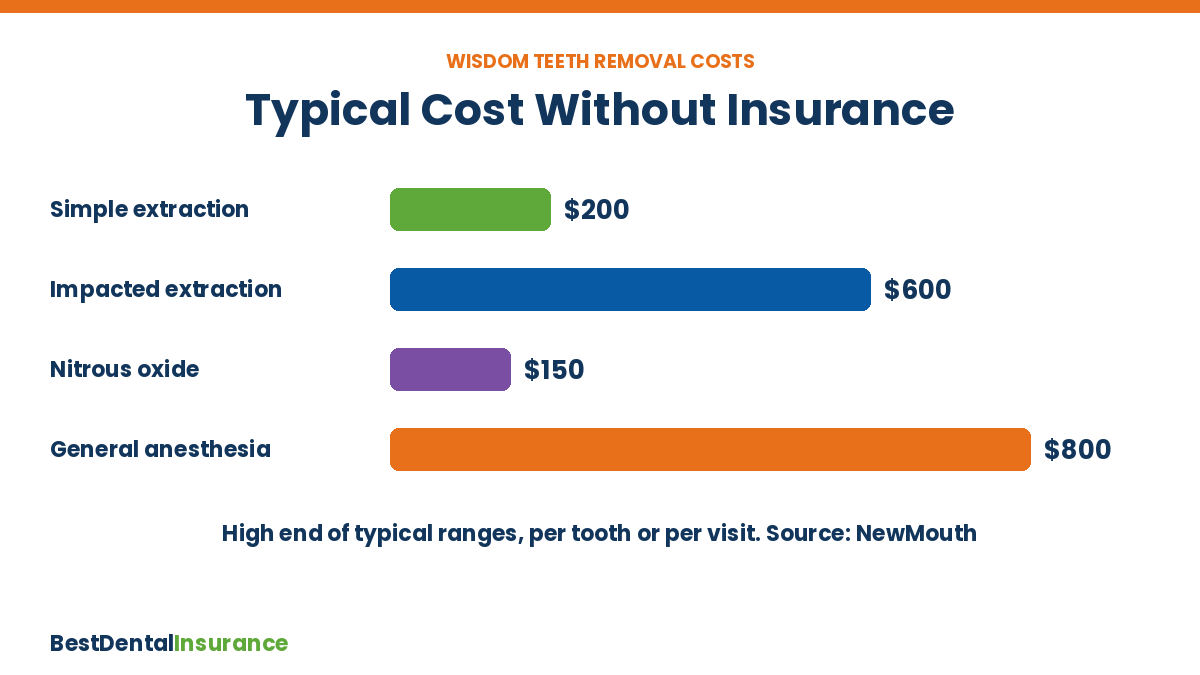
Does dental insurance cover wisdom teeth removal chart showing typical costs without insurance for extractions and sedation

Without insurance, the price of removing a wisdom tooth depends mostly on whether it has fully come in. A tooth that has erupted can often be pulled in a simple extraction. A tooth that is impacted, or stuck under the gum or bone, needs surgery and costs more.

ProcedureTypical cost without insuranceYou may pay if the plan covers 80%You may pay if the plan covers 50%
Simple extraction (per tooth)$75 to $200$15 to $40$38 to $100
Surgical / impacted extraction (per tooth)$225 to $600$45 to $120$113 to $300
Nitrous oxide (laughing gas)$40 to $150Often not coveredOften not covered
General anesthesia$250 to $800Varies by planVaries by plan
All four wisdom teethAbout $1,500 to $3,500Depends on plan and annual maximumDepends on plan and annual maximum

Source: NewMouth wisdom teeth removal cost guide (per-tooth and sedation ranges); ThePricer, citing CareCredit cost data (all four teeth). Insured columns are simple math examples before any deductible and do not reflect any specific plan. Your costs vary by dentist, area and plan.

Keep in mind that X-rays, an exam and follow-up visits are often billed separately. If all four teeth come out in one year, the total can use up much of a plan’s annual maximum.

Dental Insurance Quotes

Call a Licensed Agent Now

Compare dental plans for individuals, families and seniors from several insurance companies in one call.

☎ 1-833-667-3396

TTY users 711  |  Mon–Fri: 8am–9pm ET

No obligation to enroll

How Insurers Classify Wisdom Tooth Extractions

Dental plans group services into tiers. The tier your extraction falls into decides how much the plan pays. Plans do not all use the same rules, so check your own benefit summary.

Simple extraction. Often listed as a basic service. Many plans pay around 70% to 80% after the deductible.

Surgical or impacted extraction. May be listed as oral surgery, a basic service or a major service, depending on the plan. Major services are often paid at about 50%.

Exam and X-rays. Usually preventive or diagnostic care, often covered at or near 100% on in-network visits.

Network matters too. A PPO lets you see an out-of-network oral surgeon but may pay less, while an HMO-style plan often requires a network dentist or a referral. Our guide to dental HMO vs PPO plans explains the trade-offs.

Waiting Periods for Wisdom Teeth Removal

Many individual dental plans make you wait before they pay for anything beyond cleanings and checkups. Basic services often have a waiting period of several months, and major services often have a wait of up to 12 months. Some plans have no waiting period for oral surgery at all, and some waive waits if you had prior dental coverage.

Broker tip: If your dentist says your wisdom teeth will need to come out within the next year, buy coverage now. The waiting period clock starts on your effective date, not on the day you find out you need surgery.

Employer dental plans often have shorter waits or none. Read more in our guide to understanding dental insurance waiting periods.

When Medical Insurance Pays Instead

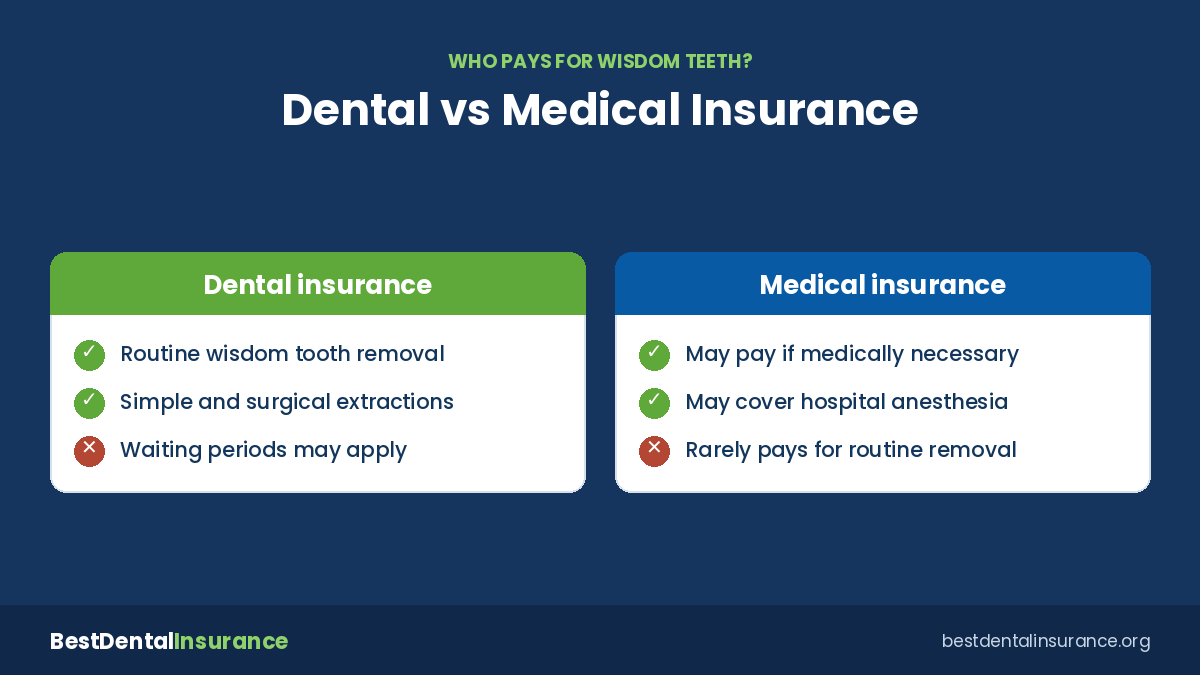
Does dental insurance cover wisdom teeth removal or medical insurance comparison

Dental insurance is usually the main payer for wisdom teeth. But in some cases, your health insurance may be billed first. Guardian notes that when oral surgery is medically necessary, the dental plan may ask you to submit the claim to your health plan before it reviews what is left.

Medical complications. Cysts, infections or damage to nearby teeth or bone may lead the surgeon to bill your health plan.

Hospital or surgery center care. Some medical plans pay for anesthesia and facility fees when sedation in a dental office is not safe for you.

Coordination of benefits. If both plans pay, the second plan usually looks at what the first one paid before covering any remaining balance.

Ask the oral surgeon’s office to check both plans before your surgery date. They handle these claims every day.

Find & Compare Plans Online

Speak with a licensed insurance agent

1-833-667-3396TTY 711

Mon-Fri: 8am-9pm ET

Is Anesthesia or Sedation Covered?

Local numbing is usually included in the extraction price. Nitrous oxide, IV sedation and general anesthesia are often billed as separate line items, and coverage for them varies a lot from plan to plan.

Type of sedationHow plans often treat it
Local anesthesiaUsually included with the extraction
Nitrous oxideOften not covered, or covered only in limited cases
IV sedation or general anesthesiaSome plans cover it with covered oral surgery, such as impacted teeth; others limit or exclude it

Coverage varies by plan and state. Check your plan’s limitations section or ask for a pre-treatment estimate.

Some medical plans cover general anesthesia for dental surgery only when certain medical conditions are met. For example, Cigna’s medical policy lists the removal of two or more impacted third molars as a case where conscious sedation may not be enough, but each plan sets its own rules.

How to Lower the Cost of Wisdom Teeth Removal

1

Get a pre-treatment estimate. Ask the surgeon to send the treatment plan to your insurer so you know what you will owe before surgery.

2

Stay in network. In-network oral surgeons charge plan-negotiated fees, which can lower both your share and the total bill.

3

Time it around your annual maximum. If you need all four teeth out, ask whether splitting the surgery across two plan years makes sense for your mouth and your budget.

4

Consider a discount plan. If you can’t wait out a waiting period, a dental discount plan may offer reduced fees right away at member dentists.

5

Use an HSA or FSA. Pre-tax health savings dollars can help pay your share of the bill.

Compare your options in our guide to dental insurance vs dental discount plans, and learn how yearly limits work in annual maximum vs lifetime maximums.

Bottom Line

Most dental insurance plans cover wisdom teeth removal in part, but how much depends on whether the extraction is simple or surgical, how your plan classifies oral surgery and whether a waiting period applies. Sedation and medical claims add more variables, so get a pre-treatment estimate and compare plans before you schedule surgery.

Related: does dental insurance cover oral surgery beyond wisdom teeth How plans tier extractions, grafts, biopsies and jaw surgery, four carriers compared, and when medical insurance pays.

See dental plans & rates in your ZIP code

Wisdom Teeth Removal Coverage — Frequently Asked Questions

➤ Does dental insurance cover wisdom teeth removal?

Yes, most dental plans cover wisdom teeth removal in part. Simple extractions are often paid as basic services, while surgical or impacted extractions may be paid at a lower major-service rate, depending on the plan.

➤ Is wisdom teeth removal a basic or major service?

It depends on the plan. A simple extraction is often basic, while a surgical extraction of an impacted tooth may be classified as oral surgery or a major service. Check your plan’s benefit summary.

➤ How much does wisdom teeth removal cost without insurance?

NewMouth puts a simple extraction at about $75 to $200 per tooth and a surgical extraction at about $225 to $600 per tooth. Removing all four teeth can run about $1,500 to $3,500, and sedation may cost extra.

➤ Is there a waiting period for wisdom teeth removal?

Often, yes. Many individual plans have waiting periods for basic and major services, sometimes up to 12 months for major work. Some plans have no waiting period, and employer plans often have shorter waits.

➤ Does dental insurance cover sedation for wisdom teeth?

Some plans cover IV sedation or general anesthesia when it is used for covered oral surgery, such as impacted teeth. Nitrous oxide is often not covered. Coverage varies widely, so ask for a pre-treatment estimate.

➤ Will my medical insurance pay for wisdom teeth removal?

Sometimes. If surgery is medically necessary, for example due to infection or cysts, or needs a hospital setting, your health plan may pay part of the bill. Your dental plan may then cover some of the rest.

➤ Can I get dental insurance right before wisdom teeth removal?

You can, but a waiting period may delay coverage for oral surgery. Look for plans with no waiting period on basic services or ones that waive waits for prior coverage, and enroll as early as you can.

➤ How can I lower my wisdom teeth removal cost?

Use an in-network oral surgeon, get a pre-treatment estimate, and plan around your annual maximum. A dental discount plan or HSA or FSA dollars can also help with your share.

Dental Insurance Quotes

Call a Licensed Agent Now

Compare dental plans for individuals, families and seniors from several insurance companies in one call.

☎ 1-833-667-3396

TTY users 711  |  Mon–Fri: 8am–9pm ET

No obligation to enroll

Find & Compare Plans Online

Speak with a licensed insurance agent

1-833-667-3396TTY 711

Mon-Fri: 8am-9pm ET

ZRN Health & Financial Services, LLC, a Texas limited liability company