


Reviewed by Russell Noga, Licensed Insurance Broker — Last updated November 22, 2026
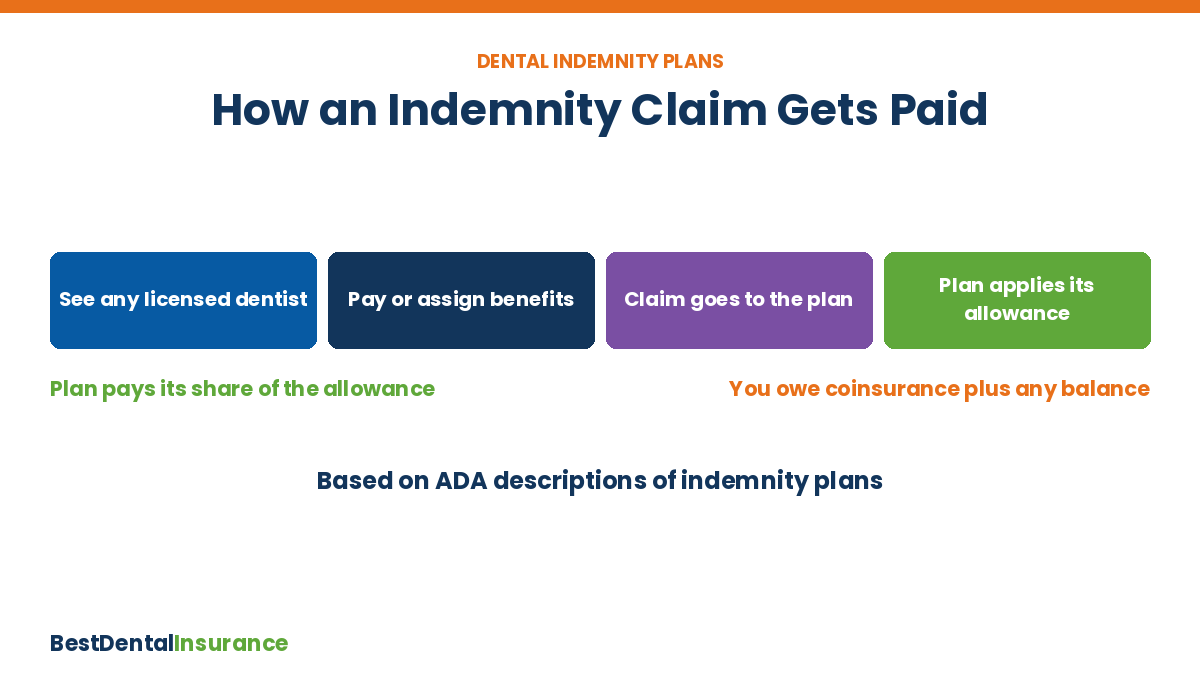
Dental indemnity plans are traditional fee-for-service dental insurance: you can see any licensed dentist, and the plan pays a percentage of its own allowed fee for each procedure, with no network of contracted dentists. Today they are sold mainly through employers, such as the Cigna Healthcare Indemnity plan, and cost more on average than dental PPO or HMO plans.
2027 by the Numbers
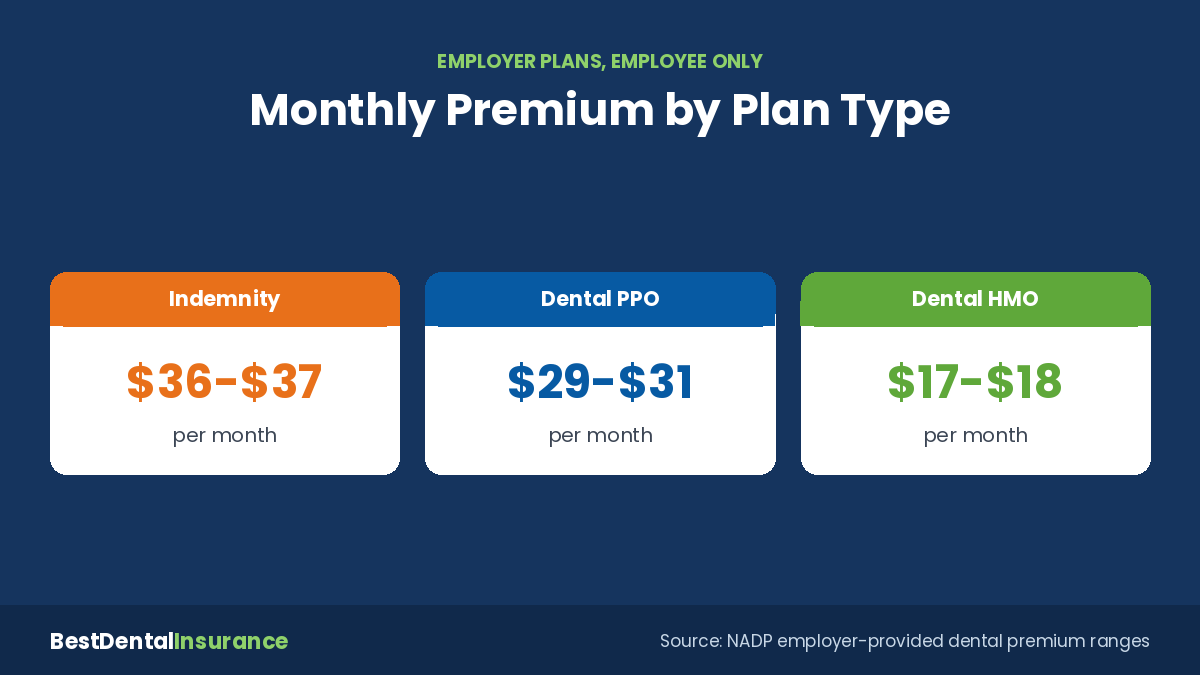
$35.97-$37.35
monthly employee-only premium for employer indemnity dental plans (NADP)
$28.70-$30.71
same figure for employer dental PPO plans (NADP)
Jan. 1, 2027
California AB 1629 starts requiring dental plans to honor assignment of benefits (CDA)
Before dental networks took over, almost every dental plan worked like this: go to the dentist you like, send the bill to the insurer, and get part of it back. The American Dental Association (ADA) still calls this traditional insurance. Its payment rules still sit under the out-of-network side of most PPOs.
This page covers how an indemnity plan values a procedure, a crown bill worked five ways, how it compares with other plan types, and who still gets value from it. For the basics of deductibles and coverage classes, see how dental insurance works.