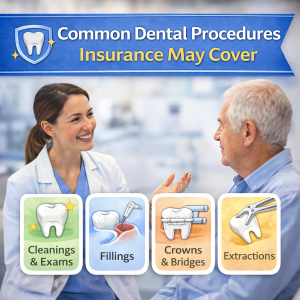
Common Dental Procedures Insurance May Cover

Dental insurance can make it easier to manage your oral health by offsetting costs associated with various dental procedures. This guide helps you understand which treatments might be covered and how coverage works.

From routine cleanings to more complex procedures like crowns and dentures, knowing what to expect can help you plan effectively.

We’ll discuss typical services covered by dental plans and potential out-of-pocket expenses, making it simpler for you to navigate dental insurance options and choose the right fit based on your needs and location.

Key Highlights

  • Dental insurance helps manage oral health costs by covering a portion of dental care expenses.
  • Insurance plans typically cover preventive services like cleanings, with options varying by provider and location.
  • Deductions must be met before insurance covers certain procedures; details vary by plan.
  • Insurance for seniors often includes coverage for age-specific needs, such as periodontal disease treatments.
  • Comparing insurance cover options requires examining the preventive, basic, and major service coverage scope.

Compare Dental Plans

What is Dental Insurance?

Dental insurance plays a vital role in managing oral health expenses. It’s an insurance plan designed to cover a portion of your dental care costs.

With several plans available, you can find one that aligns with your needs and budget. Dental insurance often includes benefits like coverage for preventive services, such as cleanings and check-ups.

Typically, you’ll encounter a mix of deductibles, copayments, and coverage limitations, but understanding these terms can help you make informed decisions.

Let’s dive deeper into the basics of dental insurance and explore how deductibles specifically work.

Basics of Dental Insurance Explained

Dental insurance is designed to cover a variety of dental services, ranging from routine cleanings to more complex procedures like root canals. Understanding the basics of dental insurance can help navigate the different types of plans available.

Typically, insurance plans are categorized as PPOs (Preferred Provider Organizations), HMOs (Health Maintenance Organizations), and indemnity plans. Each plan type has unique structures in terms of provider networks, costs, and coverage levels.

PPO plans allow for more flexibility in choosing a dentist but often come with higher premiums, whereas HMOs may restrict you to a network of specific providers for reduced rates.

Indemnity plans, meanwhile, offer the greatest freedom to choose a dentist but often involve higher out-of-pocket costs upfront. When selecting a plan, consider how often you’ll need dental services and what types of services are covered.

Most dental insurance plans include a policy with clear outlines of covered services, and it’s common for plans to cover preventive services at 100%, helping encourage regular dentist visits without additional cost to you.

However, for procedures like fillings, crowns, and dentures, coverage could range from 50% to 80%, with the remaining costs paid by you.

Understanding what’s included in insurance policy terms can help address budget concerns and ensure essential care is accessible when needed.

Notably, dental benefits often include a wait before coverage starts for major procedures, allowing time to assess the comprehensive scope of service coverage.

As for how dental insurance is priced, it is generally calculated based on your location, the insurance company, and the type of services you require regularly.

All these details can differ considerably by each insurance company, so it’s crucial to review policy details carefully.

Investigating these differences can make sure you choose the right insurance plan for your unique needs.

How a Dental Deductible Works

Understanding a dental deductible is key to managing your dental insurance efficiently. A deductible is the amount you’re required to pay out-of-pocket for dental services before your insurance plan begins to cover costs.

It’s a fundamental component of many insurance policies. Typically, annual deductibles range anywhere from $50 to $100 per person, though this can vary based on the insurance plan and provider.

Once you’ve met your deductible, your insurance company takes over, covering a portion of the dental expenses based on your policy’s terms. It’s important to understand that some plans might waive the deductible for preventive services while applying it to basic or major dental work.

For seniors, who often need comprehensive dental work, knowing how your deductible applies can significantly impact out-of-pocket costs.

For example, if a senior’s plan includes a deductible for major procedures like crowns or bridges but not for cleanings, they’ll only start paying out-of-pocket once more significant treatments are required.

Services often categorized under major dental procedures will meet the deductible, meaning other types of treatment can quickly become affordable once it’s satisfied. A critical aspect to remember is that the deductible resets annually.

Thus, understanding this cycle is crucial when planning more extensive dental treatments, especially towards year-end. Additionally, dental plans can include family deductibles, where a combined total facilitates family members in sharing responsibility until the limit is reached.

Recognizing these distinctions between a single deductible and a family one can help budget for annual expenses. Reviewing the fine print in your insurance plan will outline exactly what types of services the deductible covers and how it applies to different procedures.

As senior dental needs tend to be more focused on maintenance and major restorative services, ensuring a comprehensive understanding of deductibles can help in planning and avoiding unexpected costs.

With clarity on these parts, you’ll better manage your dental insurance, thus enabling more predictable engagement with your dental benefits.

Understanding Dental Services Covered

Understanding Dental Services Covered

Navigating the landscape of dental insurance can be challenging, but understanding what services are typically covered can make it easier. Dental services range from routine cleanings to complex procedures, each playing a crucial role in oral health.

Insurance plans generally include a combination of preventive, basic, and major services. Knowing how these services are covered under your insurance policy can significantly impact your costs and the level of care you receive.

Let’s explore how preventive care is covered and calculate the costs of common procedures to help you confidently manage your dental health.

Preventive Services and Coverage

Preventive dental care is at the heart of many insurance plans, as it encourages maintaining good oral health and preventing costly procedures down the line.

Most insurance plans cover preventive services, such as teeth cleanings and routine check-ups, entirely or with minimal out-of-pocket costs. These services are essential for detecting potential issues early, saving extensive treatments and expenses in the future.

It’s common for insurance companies to cover preventive services at 100%, allowing policyholders to maintain regular dental visits without worrying about significant financial impacts.

Typically, dental policies include two cleanings and a comprehensive oral exam per year. Fluoride treatments and dental X-rays might also fall under this category, depending on your insurance plan.

These services aim to spot minor issues early, reducing the need for more extensive treatments later. Preventive dental coverage not only keeps your dental health in check but also optimizes the overall cost-efficiency of your insurance plan.

Remember, while your plan may contribute considerably to preventive care costs, verifying what exactly is covered remains necessary since some plans might include only basic cleaning but exclude other routine services.

An added advantage of robust preventive care is directly related to seniors. As we age, maintaining oral health becomes more challenging due to conditions like gum disease or dry mouth.

Regular check-ups can help manage these issues proactively, preventing them from developing into severe problems demanding costly treatment.

Thus, understanding and utilizing preventive dental coverage is crucial for seniors and caregivers to minimize potential out-of-pocket expenses.

For those exploring new insurance plans, it can be beneficial to focus on the preventive care options each policy offers. Comparing the extent of preventive services covered helps determine the most suitable plan for your requirements.

It’s also wise to check if there’s a waiting period attached to the coverage of specific preventive treatments since this could affect your immediate dental planning.

Usually, waiting periods are minimal for preventive care, but knowing them in advance aids in scheduling and budget management.

In short, preventive services form the foundation of a practical dental coverage plan.

By focusing on routine maintenance through preventive dental care, such as regular cleanings and exams, you can significantly reduce the likelihood of expensive dental procedures down the line.

Staying informed about how your insurance plan handles these services enables you to take full advantage of your dental benefits, ensuring long-term oral health and financial peace of mind.

Costs and Coverage of Common Procedures

When examining the wider scope of dental procedures, understanding the costs and what your insurance might cover becomes essential.

Dental procedures are typically categorized as basic or major, influencing the degree of coverage they receive from an insurance plan.

Basic procedures include fillings, simple extractions, and periodontal treatments, while major procedures encompass crowns, root canals, and bridges, which tend to be more complex and costly.

The structure of an insurance plan affects how these procedures are paid for. Many policies cover basic procedures at a higher percentage than major ones, often between 70% and 80%.

As for major procedures, coverage may drop to about 50%, meaning a considerable portion is still your responsibility. It’s important to note how a policy divides these procedures since it directly impacts what you’ll pay out-of-pocket.

Reviewing past dental needs and projected future treatments can guide you in selecting a plan that aligns well with your dental history and anticipated requirements.

Understanding your insurance policy’s deductible is also key when assessing cost coverage. The majority of plans require meeting an annual deductible before they begin cost-sharing for most procedures.

After meeting this deductible, your insurance coverage will kick in as per the plan’s terms, which usually involves co-pays ranging from a flat fee to a percentage of the treatment cost, depending on the procedure type.

Knowing these details allows you to map out the financial responsibilities beforehand, minimizing unwelcome surprises when you visit the dentist.

Knowing the benefits associated with your policy and how they apply to different treatments is crucial, especially for seniors who might need more extensive dental work.

Senior dental care often involves more complex procedures, making understanding dental benefits critical to planning financially for treatments like bridges or implants.

Coverage for such major treatments often involves waiting periods; hence, being aware of these can aid in scheduling treatments effectively while minimizing out-of-pocket costs at the same time.

It’s advisable for those new to dental insurance to consult with their insurance company regarding specific coverage details before committing to a plan.

This approach helps uncover all nuances related to cost, policy coverage, and the extent of worth coverage for required procedures.

For seniors, consistent communication with your insurer ensures optimizing your insurance plan concerning both basic and major procedures, maintaining alignment with your evolving dental needs.

To conclude, understanding the costs and insurance coverage for common procedures empowers you to make informed decisions about your dental health.

Being proactive and educated about the financial aspects helps ensure you can protect both your oral health and your wallet.

Always remember, specific coverage options vary by location and insurer, so researching and entering your ZIP code into specific resources can provide tailored information to help you navigate dental insurance intelligently.

Understanding dental procedure costs and insurance coverage is crucial for managing expenses and ensuring adequate care. Consider these key aspects:

  • Differentiate between in-network and out-of-network providers for potential cost variances.
  • Familiarize yourself with annual maximum limits to plan your treatments accordingly.
  • Investigate possible preventive care benefits that might be included in your policy.
  • Clarify the terms and conditions regarding emergency dental care expenses.
  • Know the implications of missing a premium payment on your coverage status.
  • Understand the policy renewal process and its effect on your coverage.
  • Explore supplementary coverage options for treatments not covered in standard plans.

With these insights, you’ll be better equipped to navigate dental insurance details effectively.

Find & Compare Plans Online

Speak with a licensed insurance agent

1-833-667-3396TTY 711

Mon-Fri: 8am-9pm ET

Dental Insurance for Seniors

As dental needs change with age, finding a suitable dental plan becomes crucial for seniors. Dental insurance for seniors is designed to cater to age-specific oral health care needs, providing coverage that often includes preventive, basic, and major procedures.

Understanding the types of dental plans available and what each might cover is essential for making informed, budget-conscious decisions. Let’s explore plans that specifically cater to seniors and examine providers like Humana who offer tailored coverage options.

Plans That Cater to Senior Needs

When it comes to dental insurance for seniors, plans are often structured to accommodate the unique requirements of aging individuals.

These insurance plans frequently prioritize preventive care, encouraging regular check-ups and cleanings to mitigate the progression of dental issues.

Many standard dental insurance plans include these preventive services at little to no out-of-pocket cost, which is vital for maintaining oral health as we age.

Seniors may also benefit from coverage that includes procedures addressing common age-related challenges, such as periodontal disease or treatments for dry mouth. Given these considerations, selecting an insurance plan that aligns with specific health needs is crucial.

Most dental plans targeted at seniors offer comprehensive coverage that includes a range of services, from basic fillings to more intricate procedures like crowns and dentures.

Such coverage ensures that seniors can access necessary care without excessive financial strain. For seniors seeking a balance between cost and flexibility, PPO (Preferred Provider Organization) plans are a popular choice.

These insurance plans typically offer extensive networks of dentists, giving seniors the freedom to choose their provider while still enjoying a significant level of coverage.

It’s worth noting that while PPO plans might have higher premiums compared to HMO (Health Maintenance Organization) plans, the ease of accessing specialists often outweighs this cost for many seniors.

Within the realm of dental plans, waiting periods are an important consideration, especially for major dental work. For seniors, understanding and managing these waiting periods is crucial when planning dental procedures around the corner.

While waiting periods are standard in many dental insurance plans, they can affect the timing of necessary care. Seniors considering a new policy should prioritize those with minimized waiting periods or plans that waive waiting periods for essential procedures.

This flexibility ensures they can access necessary treatments without prolonged delays that might exacerbate dental issues.

Another factor that comes into play is the annual maximum benefit limit, which varies across different insurance plans. This is the maximum amount that an insurance company will pay within a policy year for covered dental services.

Seniors should assess their anticipated dental care needs and choose a plan that aligns with their potential expenses, balancing premiums with out-of-pocket costs. To maximize their benefits, it’s beneficial for seniors to fully leverage preventive care coverage.

By maintaining diligent preventive care, seniors can reduce their need for major procedures, effectively managing their dental health and optimizing the value of their insurance plan.

Ultimately, the key to selecting a suitable dental insurance plan lies in understanding one’s specific health care needs, financial considerations, and priorities.

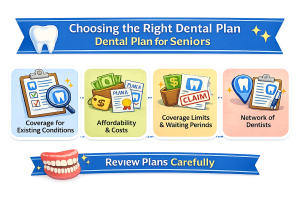
Seniors should compare different plans, focusing on coverage details like preventive care options, waiting periods, provider networks, and annual maximums.

By doing so, they can secure a dental plan that supports their oral health care effectively, empowering seniors to maintain both their health and financial independence with greater confidence.

Considering Humana and Other Providers

Considering Humana and Other Providers

When evaluating dental insurance providers for seniors, Humana stands out along with other notable insurance companies due to its comprehensive plans tailored for various senior needs.

Humana offers several dental insurance options that appeal to seniors by providing coverage for essential services and preventive care.

Their plans are designed to cater specifically to the oral health needs common in aging, such as covering dentures and addressing periodontal disease.

With various coverage levels, Humana and similar providers help seniors focus on maintaining their dental health without the added stress of high costs.

Humana’s plans typically include a rich assortment of preventive care services that are crucial for seniors aiming to maintain oral health.

These cover bi-annual cleanings and exams, making them appealing to those wishing to avoid more severe dental issues through early detection and regular maintenance.

Coverage often extends to basic procedures like fillings and extractions, assisting seniors in managing routine dental care effectively.

Major dental services, such as crowns or bridgework, are also part of their higher-tier plans, allowing seniors to access comprehensive care when they need it most.

However, it’s essential to examine specific waiting periods for major services, as these can influence the timing and overall cost of dental care.

Other providers also offer competitive dental insurance plans suitable for seniors. For instance, insurance companies like Delta Dental and Cigna present a variety of dental plans, balancing the coverage between affordability and the flexibility of dentist choices.

Seniors should evaluate different plans based on their specific requirements, like cost, network size, and coverage restrictions, which can significantly vary between providers.

Comparing these factors ensures that seniors are informed about the potential out-of-pocket costs, coverage limitations, and overall benefits before committing to a plan.

Beyond traditional insurance companies, some non-traditional avenues for dental coverage exist, providing more options for seniors.

Discount dental plans, for example, may offer reduced rates on various services without the complexities of insurance, such as navigating waiting periods or meeting deductibles.

These plans can be beneficial for seniors who require regular dental work but do not want to commit to an insurance plan’s stringent structure.

However, a crucial consideration is that while discount plans reduce costs, they do not provide actual insurance coverage and are not replacements for comprehensive insurance plans.

As seniors explore the multitude of plan options, entering information such as their ZIP code into online platforms like Bestdentalinsurance.org can provide personalized insights into available plans in their area.

This step helps identify which providers offer the best combination of benefits and convenience tailored to seniors’ needs. This information is invaluable in selecting a provider who ensures not just health security but also financial stability.

In summary, reviewing and comparing insurance company offerings in detail empowers seniors to make decisions that safeguard their oral health needs while aligning with their financial reality.

Factors to Consider When Choosing a Plan

Selecting the right dental plan involves several considerations crucial for ensuring it meets your needs effectively. It’s important to evaluate how dental procedures are supported by different plans, as well as the total cost implications.

Factors like the types of dental services covered, cost transparency, coverage limitations, and available network of providers all play a vital role.

You’ll want to understand the differences between insurance plan structures, such as PPOs and HMOs, and how they might align with your dental care needs and budget.

Consider the benefits and potential out-of-pocket expenses, which can significantly vary from one plan to another.

Comparing Insurance Cover Options

Comparing Insurance Cover Options

When looking at different insurance plans, it’s essential to compare insurance cover options to find a plan that aligns closely with your specific dental care needs and financial situation.

Understandably, insurance coverage varies significantly across plans, affecting how much of your dental expenses are directly covered.

Some dental plans might offer excellent coverage for preventive dental care, like cleanings and routine checkups, while being less generous with coverage for major procedures like crowns or bridges.

Thus, evaluating the scope of insurance cover against your dental history and future care needs is pivotal.

The first step in comparing insurance cover is to review the insurance policy terms in detail, noting what dental procedures are included. Many insurance plans categorize services into preventive, basic, and major procedures, each impacting your costs differently.

Preventive care is often covered at 100%, encouraging regular visits without additional anxiety about out-of-pocket costs. However, basic procedures such as fillings may have a copayment or coinsurance component, meaning you’ll share some of the costs.

For major dental treatments, like dental implants or root canals, coverage might be lower, requiring a larger share of out-of-pocket expenses.

Moreover, consider the cost structure within an insurance plan.

Check how deductibles and maximum limits influence the overall financial burden. An insurance plan’s deductible is the amount you pay before the insurer covers the rest, while the maximum limit is the total amount the insurance will pay per year.

Understanding these two factors helps you predict expenses better and ensure that the insurance plan choice is sustainable financially, especially if you anticipate significant dental work.

Network flexibility is another critical component. PPO plans offer the freedom to visit any dentist, though often at a higher cost, whereas HMO plans require staying within a contracted network, which might be restrictive but more cost-efficient.

Dental insurance coverage provided by PPOs could appeal to those who prefer choosing their provider, while HMOs might suit those comfortable with the available network.

Assess if your preferred dentists are covered by the plan’s network, as this can affect your convenience and satisfaction with the services provided.

Comparing other aspects, such as waiting periods, is also essential. Waiting periods, especially for major procedures, can delay the start of insurance coverage, affecting how quickly you can access dental care.

Plans might impose different waiting times, often from six to twelve months, for major interventions, which can be crucial for planning treatments.

Lastly, always remember to account for your local factors. Insurance plan offerings can vary by location and provider, affecting costs and available benefits.

Tools, such as ZIP code searches on Bestdentalinsurance.org, help customize options, ensuring you’re comparing relevant plans accurately.

Exploring these nuances not only aids in choosing the right dental plan but also empowers you to make more confident, informed decisions about your dental health and associated finances.

By comparing insurance cover thoughtfully, you can anchor your dental care within a financially savvy framework, safeguarding both oral health and wallet.

Understanding what dental insurance may cover can help you make informed decisions about your dental health. From preventive services like cleanings to more complex procedures like fillings and crowns, knowing what is included can save unexpected costs.

Remember that plans vary by location and provider, so it’s essential to review what specific plans offer in your area. For a deeper dive into dental insurance options, please enter your ZIP code on our website to explore plans that fit your needs.

Costs and coverage differ, allowing you to find a plan that suits your dental care requirements.

Compare Dental Plans

Frequently asked Questions

What is typically covered by dental insurance plans?

Dental insurance usually covers preventive services like cleanings and check-ups, basic procedures like fillings, and major procedures including root canals and crowns, though the extent of coverage varies by plan.

How do deductibles work in dental insurance?

A deductible is the amount you pay out-of-pocket before your insurance starts to pay. Once it’s met, insurance covers a portion of the costs according to your policy terms, except for preventive services, which might be covered without meeting the deductible.

Are there specific dental plans for seniors?

Yes, dental plans for seniors often cover age-related needs such as periodontal treatments and dentures. Comparing plans focusing on preventive and major services is important to find a suitable one.

What is the difference between PPO and HMO dental plans?

PPO plans offer more flexibility in choosing dentists but may have higher premiums. HMO plans restrict you to a network of providers with generally lower costs. Both have different structures and cost implications.

How can I find the right dental insurance plan for my needs?

Use resources like Bestdentalinsurance.org to explore options based on your location. Review coverage details, network flexibility, deductibles, and waiting periods to ensure the plan meets your dental care requirements.

Have Questions?

Speak with a licensed insurance agent

1-833-667-3396

TTY users 711

Mon-Fri: 8am-9pm ET

Find & Compare Plans Online

Speak with a licensed insurance agent

1-833-667-3396TTY 711

Mon-Fri: 8am-9pm ET

ZRN Health & Financial Services, LLC, a Texas limited liability company