How to Choose a Medicare Dental Plan

Navigating dental coverage options as a Medicare beneficiary can feel overwhelming. It’s important to understand what various plans offer and how they align with your needs.

This guide provides clear, simple insights into selecting a dental plan that complements your Medicare coverage, focusing on costs, benefits, and key plan details.

Whether you’re considering preventive care, fillings, crowns, or dentures, learning how plans differ by location and provider will help you make an informed decision. Explore how to identify the right dental plan to keep your smile healthy and vibrant.

Key Highlights

  • Original Medicare does not cover routine dental services, requiring separate plans for comprehensive dental care.
  • Medicare Advantage plans may offer dental coverage, varying in services and costs; compare plans carefully.
  • Stand-alone dental plans focus solely on dental services; they are separate from general healthcare insurance.
  • Costs and coverage of dental plans vary; consider premiums, deductibles, and out-of-pocket expenses.
  • Assess personal dental needs and budget to choose between stand-alone dental or Medicare Advantage plans.

Compare Dental Plans

Understanding Medicare and Dental Coverage

Deciphering the relationship between Medicare and dental coverage is crucial for navigating your healthcare options. Many seniors are surprised to find that dental services aren’t automatically included in Original Medicare.

However, understanding the nuances of Medicare’s offerings, including what dental services are covered under certain parts, can pave the way to choosing a suitable plan.

Here we’ll delve into Medicare’s role in dental health and how Original Medicare affects these services, offering clarity on what this means for your dental coverage and helping you confidently make informed decisions for your oral health needs.

Medicare's Role in Dental Health

Medicare's Role in Dental Health

Medicare itself provides limited dental coverage. Generally, it doesn’t cover routine dental services, leaving many seniors puzzled about how to manage their dental health.

Understanding why Medicare doesn’t typically pay for dental services is important. Historically, dental care was separated from overall healthcare, leading to its exclusion from Medicare.

However, some Medicare Advantage plans offer dental coverage as an additional benefit. Medicare Advantage, provided by private insurers, can vary significantly in the level and type of dental services it covers.

This can range from preventive services, like cleanings, to more extensive procedures, such as dentures or crowns.

The Centers for Medicare & Medicaid Services (CMS) oversees these plans, ensuring they offer at least the same benefits as Original Medicare but with added services.

It’s vital to shop around, comparing plans to find the one that matches your needs, budget, and coverage expectations. By understanding Medicare’s limitations and exploring these additional options, seniors can better manage their dental health.

To further assist seniors in managing their dental health, consider these practical tips when navigating Medicare Advantage plans for dental coverage:

  • Compare annual costs, including premiums, deductibles, and copayments, for each plan.
  • Investigate if emergency dental services are part of the offered coverage.
  • Check the network of dental providers available under each plan.
  • Assess the maximum annual benefits for dental services provided.
  • Determine if the plan covers specialized services like orthodontics or periodontics.
  • Review the plan’s policy on pre-existing conditions and necessary waiting periods.
  • Explore if the plan offers preventive care options, like regular cleanings.

By considering these points, seniors can make informed decisions and better manage their dental health care options.

How Original Medicare Affects Dental Services

How Original Medicare Affects Dental Services

Original Medicare consists of Part A and Part B. Generally, Part A mainly covers hospital insurance, while Part B covers medical insurance, leaving dental services mostly uncovered.

This exclusion means routine checkups, cleanings, dentures, and other typical dental services aren’t part of the standard Medicare package. However, there are exceptions under certain conditions.

For instance, if dental treatment is required for a more extensive medical procedure covered by Medicare, such as reconstructive surgery after an accident, it may be included.

Outside these exceptions, beneficiaries need to seek supplemental plans or Medicare Advantage plans that offer specific dental coverage.

It’s critical to understand that while some may expect Medicare to extend to dental care, its original structure doesn’t support this inclusivity.

Therefore, seniors should consider individual dental plans or Medicare Advantage options to fill this gap, ensuring their dental health doesn’t take a backseat.

Being well-versed in how Original Medicare operates regarding dental services allows individuals to plan accordingly, addressing any potential coverage gaps effectively.

Comparing Dental Plan Options

Choosing the right dental plan involves comparing various options available to you under Medicare. It’s essential to understand the differences between stand-alone plans and Advantage plans, both of which offer unique benefits and coverage levels.

While stand-alone plans focus solely on dental insurance, Medicare Advantage plans integrate dental services into broader healthcare coverage.

Additionally, examining the cost and coverage details of each option can help seniors make informed decisions about their dental health needs.

This section will explore these considerations, helping you confidently navigate the choice of a dental plan that best suits your requirements.

Find & Compare Plans Online

Speak with a licensed insurance agent

1-833-667-3396TTY 711

Mon-Fri: 8am-9pm ET

The Difference Between Stand-alone and Advantage Plans

When considering dental coverage, it’s important to understand the distinct differences between stand-alone dental plans and Medicare Advantage plans.

Stand-alone plans specifically provide dental insurance, focusing on covering a wide array of dental services such as preventive care, fillings, and possibly major treatments like crowns or dentures.

These plans are ideal for those who want dedicated coverage for dental visits without bundling it with their general healthcare insurance.

On the other hand, Medicare Advantage plans, also known as Part C, combine health insurance with additional benefits, potentially including dental coverage.

However, not all Advantage plans offer the same level of dental services, so it’s crucial to examine each plan’s details closely.

While Advantage plans offer the convenience of combining health and dental coverage into one, the scope of dental benefits can vary substantially, from basic preventive services to more comprehensive coverage.

Seniors should consider their current health needs and financial situations to decide whether a stand-alone plan or a Medicare Advantage plan will provide the necessary support for their dental health.

Exploring Costs and Coverage Details

Understanding the cost and coverage of dental plans helps ensure you make well-informed decisions about your dental health. Dental plans may have different premium costs, deductibles, and levels of coverage based on the services you anticipate needing.

Stand-alone dental plans might offer lower premiums but could require separate premiums from general healthcare insurance. In contrast, Medicare Advantage plans often include dental coverage in a single premium, which can simplify payments.

However, these plans may have varying degrees of coverage, affecting out-of-pocket costs for seniors. Coverage can range widely between basic preventive care, like cleanings and exams, to more involved procedures such as root canals or implants.

Verify the network of dental providers available under each plan to avoid unexpected costs, as some insurers limit services to in-network providers.

Seniors must weigh these factors carefully, considering the long-term health benefits against the immediate costs, to choose a plan that’s both comprehensive and budget-friendly.

By thoroughly exploring these cost and coverage details, you can confidently select a dental plan that fits your needs.

Key Considerations When Choosing a Plan

Key Considerations When Choosing a Plan

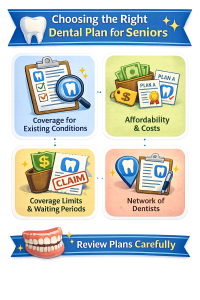
Choosing the right dental plan under Medicare involves understanding your specific dental needs and comparing available options. Each plan varies in the type of services it covers, costs, and network of dentists.

Medicare Advantage plans may include dental coverage, but the level of care offered can differ. Stand-alone dental insurance plans provide dedicated services, which might be essential for some seniors.

It’s important to assess your current health needs, budget constraints, and the types of dental procedures you might require. This way, you can make an informed choice that aligns with your healthcare requirements and financial situation.

Identifying Your Dental Needs

Before you dive into the vast sea of dental plans, start by assessing your personal dental needs. Your dental health history plays a crucial role in determining the type of coverage you should seek.

Consider how often you visit the dentist and if you anticipate needing specific services, like fillings, crowns, or advanced procedures such as implants.

Understanding the frequency and type of care you require will help you narrow down your choices between stand-alone dental insurance and Medicare Advantage plans that offer supplementary dental coverage.

Think about your budget, too. Knowing what you can afford in terms of monthly premiums, deductibles, and out-of-pocket expenses will guide your decision-making process.

Individual dental plans often come with different financial structures, so it’s beneficial to understand your financial limits before committing.

Some plans require upfront payments, while others might be spread out over the year. Being clear about these aspects can help avoid unexpected costs later.

Finally, look into the network of dentists associated with each plan. Providers can vary, and it’s important to choose a plan that includes dentists you trust or who are located conveniently near you.

Some plans restrict care to in-network providers, which could affect your choice. By carefully considering these elements, you’ll ensure that the plan you select meets both your dental and financial needs efficiently.

Choosing a dental plan under Medicare involves understanding your specific needs and the coverage options available in your area.

To make an informed decision, consider factors such as the types of services you need most, potential out-of-pocket costs, and the list of dentists available within the plan’s network.

Research thoroughly and use resources available to find a plan that aligns with your dental health needs. Enter your ZIP code on our website to explore options tailored to your location, as plan details and availability may vary.

Compare Dental Plans

Frequently Asked Questions

Does Original Medicare cover dental services?

Original Medicare, which includes Part A and Part B, generally does not cover routine dental services such as checkups, cleanings, or dentures. Some dental care might be covered if it’s part of a hospital-related procedure.

What are Medicare Advantage plans and how do they relate to dental coverage?

Medicare Advantage plans (Part C) are offered by private insurers and often include additional benefits like dental coverage. These plans can vary widely in services and costs, so it’s important to examine each plan’s specific dental benefits.

What are stand-alone dental plans?

Stand-alone dental plans are insurance plans specifically for dental services. These plans are not included with general healthcare insurance or Medicare and focus solely on dental care needs such as preventive visits and major treatments.

How should I evaluate the costs associated with dental plans?

When evaluating costs, consider premiums, deductibles, and potential out-of-pocket expenses. Stand-alone plans may have separate payments from general insurance, while Medicare Advantage plans may bundle costs, affecting overall expenses.

Why is it important to assess personal dental needs before choosing a plan?

Assessing personal dental needs helps you choose a plan tailored to your specific requirements and budget. Consider the frequency of dental visits and the types of services you might need to ensure adequate coverage.

Have Questions?

Speak with a licensed insurance agent

1-833-667-3396

TTY users 711

Mon-Fri: 8am-9pm ET

Find & Compare Plans Online

Speak with a licensed insurance agent

1-833-667-3396TTY 711

Mon-Fri: 8am-9pm ET

ZRN Health & Financial Services, LLC, a Texas limited liability company