


Individual Dental Insurance: How to Buy a Plan Without an Employer

Reviewed by Russell Noga, Licensed Insurance Broker — Last updated November 5, 2026

Individual dental insurance is a dental plan you buy and pay for yourself, directly from a carrier such as Anthem, Humana or Physicians Mutual, through a broker, or with a health plan on the Marketplace. Most pay 100% for cleanings and a smaller share for fillings and crowns up to a yearly cap, often $1,000 to $2,000, and many make you wait before major work is covered.

2027 by the Numbers

$2,500

yearly maximum on Anthem’s Essential Choice Incentive plan, with no waiting periods (Anthem)

$0

deductible and no yearly cap on cash benefits on Physicians Mutual dental plans (Physicians Mutual)

60-99

issue ages for Mutual of Omaha individual dental insurance (Mutual of Omaha)

Freelancers, gig drivers, small-business owners, early retirees and people between jobs share one problem: no employer is choosing a dental plan or paying part of it. Coverage is still sold to them, one person or household at a time, under different rules.

Below we line up six plans sold to individuals using the carriers’ own documents, explain where to buy, and cover tax rules most shoppers miss. If you work for yourself, our page on self-employed dental insurance adds more.
Compare Individual Dental Plans in Your Area

How a Plan You Buy Yourself Differs From a Work Plan

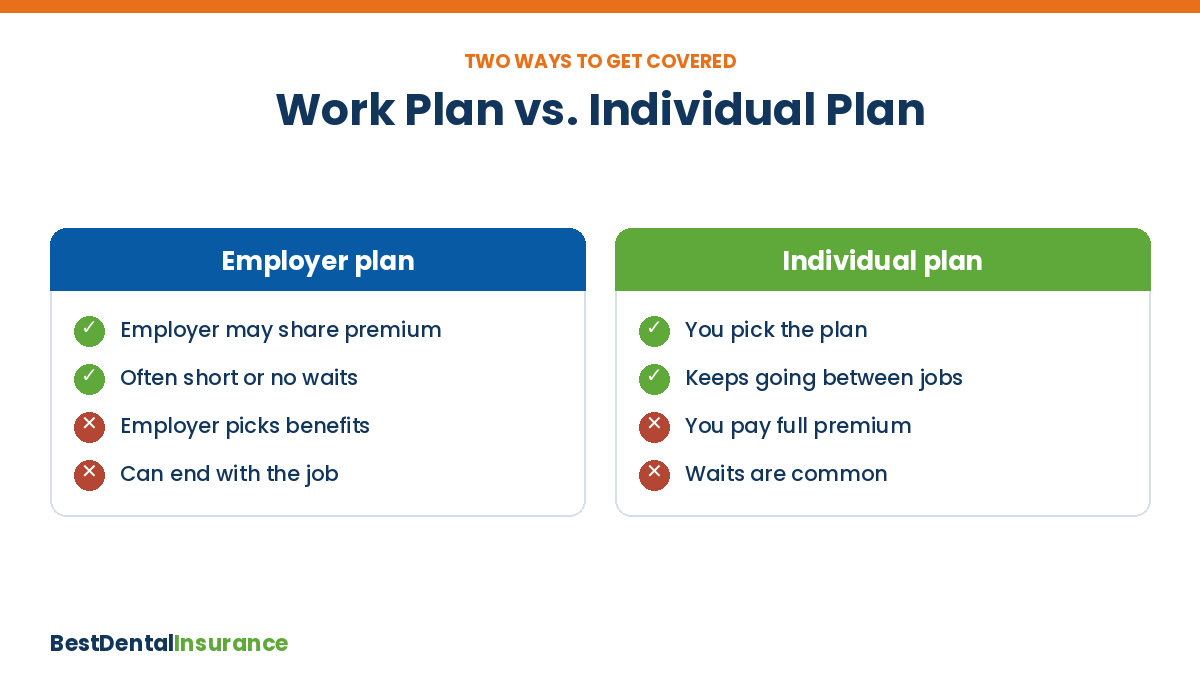
Employer group dental plan compared with individual dental insurance you buy yourself

An employer plan is bought for a whole group, so the company chooses the benefits and often pays part of the premium. An individual policy is priced for you alone, and carriers guard against people who join only when a big bill is coming.

FeatureEmployer (group) planIndividual plan
Who picks the benefitsYour employerYou, from the carrier’s menu
Who pays the premiumOften shared with the employerYou pay all of it
Waiting periodsMany group plans have short or no waitsCommon for basic and major care
When you can joinHire date or open enrollmentMany carriers sell year-round
If you leave your jobEnds, unless you elect COBRAStays with you as long as you pay

General patterns. Each plan sets its own rules, and benefits vary by state.

The upside is control. You choose the yearly cap, the network and whether to accept a longer wait for a lower premium, and a job change cannot take the plan away.

Dental Insurance Quotes

Call a Licensed Agent Now

Compare dental plans for individuals, families and seniors from several insurance companies in one call.

☎ 1-833-667-3396

TTY users 711  |  Mon–Fri: 8am–9pm ET

No obligation to enroll

The Four Kinds of Dental Coverage Sold to Individuals

Individual plans come in four basic designs. Three are insurance; the fourth only lowers prices.

PPO. Pays a percentage after a deductible, up to a yearly maximum. Any dentist works, but network offices cost less.

Dental HMO (DHMO). You pick a network dentist and pay set copays. Often no deductible or yearly cap, but usually no out-of-network benefit, and sold only in some states.

Indemnity or cash-benefit plan. Pays a set amount per procedure to any dentist. Physicians Mutual’s plans work this way, with no deductible and no annual maximum on cash benefits.

Discount or savings plan. Not insurance. Mutual of Omaha’s savings plan costs $8.95 a month or $99 a year and gives 5% to 60% off at participating dentists, with no waiting period.

A discount plan can suit someone who needs work now and will pay the bill anyway. See dental insurance vs. dental discount plans for that choice.

Where Individuals Can Buy a Dental Plan

Straight from the carrier. Anthem, Humana, Physicians Mutual, Mutual of Omaha and others quote online by state and age. Plan names and benefits can change at the state line.

The Health Insurance Marketplace. On HealthCare.gov, CMS says you cannot buy a stand-alone dental plan without a health plan, and tax credits apply only to the children’s dental portion. Some state exchanges differ.

A licensed broker or comparison site. One quote request can show several carriers side by side, at the same price as buying direct.

COBRA after a job ends. Each family member can choose which lines of coverage to keep, so you may continue only the dental plan, under federal COBRA rules.

Marketplace detail: Adult dental is not an essential health benefit under the ACA, so exchange insurers need not offer it. Dropping a stand-alone dental plan early can lock you out until the next open enrollment.

For dates and state differences, see our Marketplace dental insurance guide.

Six Individual Plans Compared From the Carriers' Own Documents

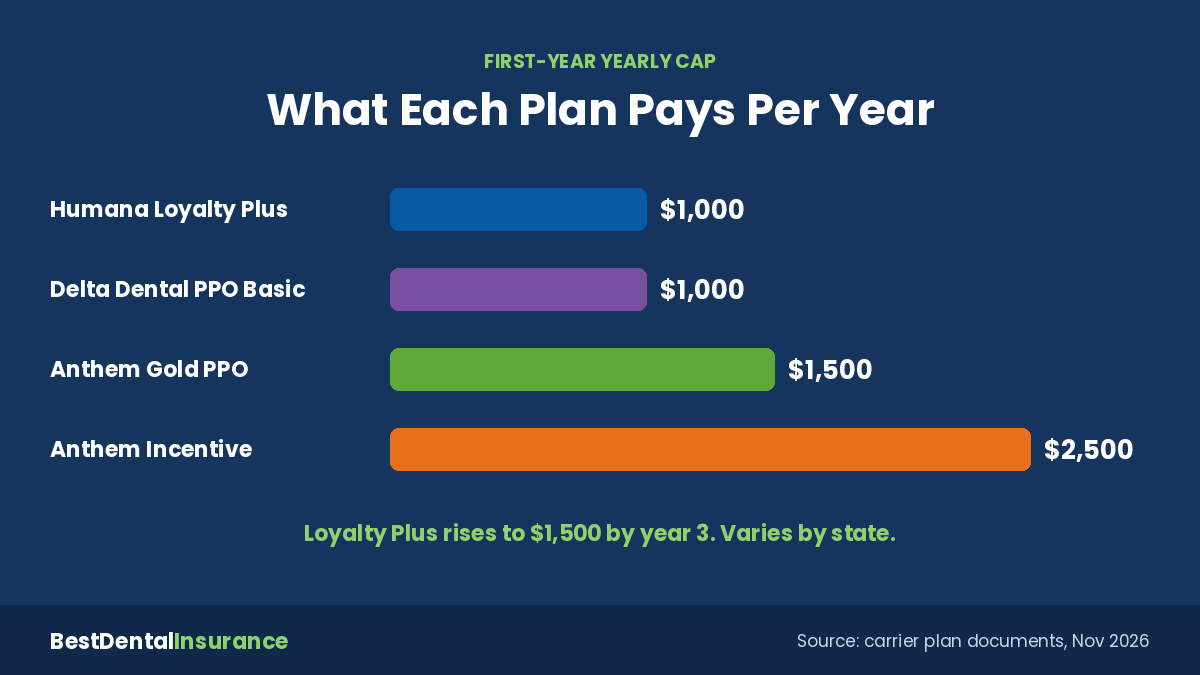
First-year yearly maximums on four individual dental insurance plans from Humana, Delta Dental and Anthem

No carrier shows its plans next to a rival’s, so we pulled these figures from each company’s own plan page or benefit summary. Anthem lists coinsurance as your share; the others list what the plan pays.

PlanYearly maxDeductibleBasic / majorWaits (basic / major)
Anthem Essential Choice Gold PPO$1,500$50You pay 20% / 50%3 months / 6 months
Anthem Essential Choice Incentive$2,500$50You pay 40% / 70% at first, less after preventive visitsNone
Humana Loyalty Plus PPO$1,000 year 1, $1,500 by year 3One-time, for as long as enrolledPlan pays 40% / 20% year 1, 70% / 50% from year 3None
Physicians Mutual PremierNone on cash benefitsNonePlan pays 70% of the allowed chargeNone / 12 months
Delta Dental PPO Basic (individual)$1,000$50 ($150 family)Plan pays 50% / major not covered6 months (waived with prior coverage) / n/a
Mutual of Omaha dental insuranceYou choose a levelNot stated on pageNot stated on pageNone on any service

In-network figures. Sources: Anthem, Humana, Physicians Mutual and Mutual of Omaha plan pages; Delta Dental PPO Basic 2026 benefit summary; checked Nov 2026. Mutual of Omaha sells to ages 60-99, no family plans. Anthem waits may be waived with prior coverage. Varies by state.

The trade-off is clear: no-wait plans such as Loyalty Plus start with low payouts and grow, while Anthem Gold pays more sooner but makes you wait. For more day-one options, see dental plans with no waiting period.

Find & Compare Plans Online

Speak with a licensed insurance agent

1-833-667-3396TTY 711

Mon-Fri: 8am-9pm ET

What Individual Coverage Costs, and the Tax Rules That Help

Premiums depend on ZIP code, age, plan level and how many people you cover, so carriers quote rather than post one price. Humana, citing a Forbes analysis, puts the average near $52 a month for a comprehensive policy and $26 for preventive-only. Our average cost for dental insurance page goes further.

Self-employed deduction. IRS Form 7206 instructions let eligible self-employed people deduct medical and dental insurance premiums for themselves, a spouse and dependents, but not for any month they could join an employer-subsidized plan.

HSA money between jobs. IRS Publication 969 bars HSA funds for insurance, except for COBRA coverage and health coverage while you collect unemployment, among a few others.

Paying for care itself. Dental treatment such as fillings and crowns is generally an eligible HSA or FSA expense, even when premiums are not.

Tax note: These points summarize IRS instructions. Eligibility depends on income, business setup and other coverage, so confirm with a tax professional.

Picking the Right Individual Plan in Five Steps

1

Price the work you expect. Cleanings only, a filling soon or a crown this year? That decides whether a short wait or a high cap matters more.

2

Check your dentist first. Search the carrier’s directory for your dentist before you apply.

3

Compare year-one numbers. On plans that grow over time, read the first-year cap and payout.

4

Use prior coverage. Leaving a group plan? Ask whether proof of it waives or shortens the wait, as Anthem and Delta Dental allow.

5

Read the outline of coverage. Look for missing-tooth rules, frequency limits and cancellation terms.

Retirees can buy individual plans too. Original Medicare does not cover most routine dental care, and dental in Medicare Advantage plans varies by plan. Some carriers sell only to older buyers, as Mutual of Omaha does with ages 60 to 99, while Anthem and Humana also quote younger adults and families.

Bottom Line

Individual dental insurance gives you coverage no employer controls, but you pay the full premium and usually face waits or low first-year payouts. Match the plan to the work you expect, confirm your dentist is in network, and check whether prior coverage or a tax rule cuts your cost.

Related: how COBRA dental insurance compares with buying your own plan Deadlines, the 102% cost cap and a side-by-side of COBRA, spouse, Marketplace and individual dental options.

See individual dental plans and prices for your ZIP code

Individual Dental Insurance — Frequently Asked Questions

➤ Can I buy dental insurance for just myself?

Yes. Anthem, Humana and Physicians Mutual sell policies to one adult, and most also let you add a spouse or children. Plans vary by state.

➤ Is individual dental insurance more expensive than an employer plan?

Usually, to you. An employer often pays part of a group premium, while you pay all of an individual one.

➤ Can I keep only my dental plan after I leave a job?

Often, yes. Under federal COBRA rules each qualified family member chooses which lines of coverage to continue, so dental can be kept without medical, usually at full cost plus a small fee.

➤ Can I get adult dental on HealthCare.gov without a health plan?

No. CMS says the federal platform does not sell a stand-alone dental plan unless you also enroll in a health plan. Some state-run exchanges allow dental-only purchases.

➤ Are individual dental premiums tax deductible?

They can be for self-employed people. IRS Form 7206 instructions cover medical and dental insurance premiums, except for months you could join an employer-subsidized plan.

➤ Is there individual dental insurance with no yearly maximum?

Some have none. Physicians Mutual lists no deductible and no annual maximum on cash benefits, though it pays set amounts per procedure. Dental HMOs also often skip the yearly cap.

➤ Do I have to be a certain age to buy an individual dental plan?

It depends on the carrier. Mutual of Omaha sells dental insurance to ages 60 to 99, while others quote adults of any age and add children on family plans.

➤ How fast does individual dental coverage start?

Many carriers take applications year-round, and coverage can start soon after approval. Waits for fillings or crowns may still apply.

Dental Insurance Quotes

Call a Licensed Agent Now

Compare dental plans for individuals, families and seniors from several insurance companies in one call.

☎ 1-833-667-3396

TTY users 711  |  Mon–Fri: 8am–9pm ET

No obligation to enroll

Find & Compare Plans Online

Speak with a licensed insurance agent

1-833-667-3396TTY 711

Mon-Fri: 8am-9pm ET

ZRN Health & Financial Services, LLC, a Texas limited liability company